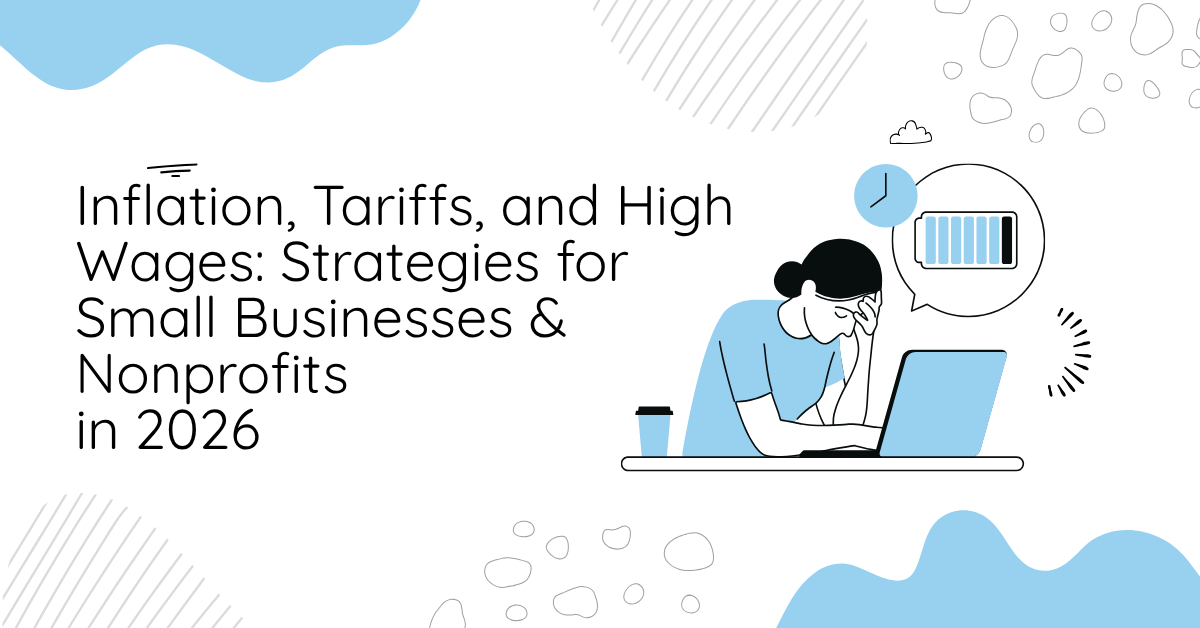
Small businesses entered 2026 facing a more complicated operating environment than the original draft suggests. According to the Federal Reserve’s 2026 Report on Employer Firms, rising costs of goods, services, and wages was the most commonly reported financial challenge in the prior year, and more than four in ten firms said tariffs also created a financial challenge. Those pressures were especially sharp in retail and manufacturing, where tariff-related cost challenges were reported by 69 percent and 62 percent of firms, respectively.[1] That matters because cost control in 2026 is no longer just about trimming overhead. It is about protecting margin while keeping service quality high, preserving employee morale, and staying compliant as laws and operating costs change. The strongest small-business response is not one dramatic cut, but a disciplined mix of pricing strategy, smarter purchasing, selective technology use, retention-focused people practices, and better risk management.[2][3][4][5][1] Why the Old Draft Needs Updating The older draft is outdated because it frames inflation, tariffs, and labor costs as a 2025 issue, while current 2026 data shows those pressures continued and, in some industries, intensified. It also understates the role of tariffs, even though Federal Reserve survey data and Boston Fed analysis both show meaningful import-cost pressure and weaker growth expectations tied to trade uncertainty.[1][2] The inventory section also needs a more modern approach because a pure just-in-time model is riskier when imported inputs, supplier costs, and lead times can shift quickly. The preventive-maintenance section should avoid unsupported ROI claims unless backed by reliable evidence, and the “free social media” section should be reframed because social media still consumes staff time and production effort even when ad spend is low.[6][2][1] The wage section should also move beyond treating higher pay as a cost problem alone. Retention, productivity, and management quality matter because turnover itself is expensive, and SHRM materials show direct replacement costs can reach 50 percent to 60 percent of annual salary, with total turnover costs ranging from 90 percent to 200 percent depending on role and context. Other employer guidance citing SHRM similarly notes that replacing an employee often costs half to three-quarters of annual salary.[5][7][1] The compliance section deserves a stronger, more practical treatment. Employee handbooks, complaint procedures, labor-law posters, manager training, and policy acknowledgments all help reduce risk because agencies like the EEOC emphasize clear written policies and internal reporting procedures as sound small-business practice.[3][4] Pricing, Purchasing, and Operational Cost Control Start with pricing before you start cutting operations. The Federal Reserve found that among firms with foreign inputs whose costs rose, 76 percent passed at least some of those increases on to customers and 60 percent absorbed at least some of them, which shows many businesses are already using a blended strategy instead of relying only on cuts. For many small businesses, the practical move in 2026 is to review pricing more often, protect margin on high-value offerings, and create good-better-best service tiers so price-sensitive customers can trade down without leaving altogether.[8][1] Sourcing and inventory strategy should also be updated. The old draft recommends lean inventory management, but the current environment calls for a more balanced approach because only a small share of firms affected by higher foreign-input costs said they shifted to domestic suppliers or alternative foreign suppliers, suggesting supplier changes are often harder than they sound. A stronger recommendation is to segment inventory by risk: keep lean stock for stable, local inputs, but carry more deliberate safety stock for materials exposed to tariff volatility, long lead times, or limited supplier options.[2][1] Vendor and contract management should now be treated as a strategic discipline, not just a routine savings tactic. If a product line, service bundle, or imported input is vulnerable to cost swings, review renewal dates early, ask vendors for volume discounts, longer pricing commitments, or revised minimums, and compare total landed cost rather than unit price alone. This matters even more because current small-business revenue and employment expectations have fallen to their lowest levels since 2020, leaving less room for waste or poor purchasing decisions.[9][1] Energy efficiency also deserves a more concrete update. Instead of a generic reminder to turn off lights, the stronger 2026 advice is to target upgrades with measurable payback, especially lighting, HVAC, ventilation, and building-envelope improvements, because those are the same categories tied to federal tax incentives under Section 179D for qualifying commercial-building efficiency upgrades. The IRS states that owners of qualified commercial buildings may claim deductions for eligible energy-efficient property, with 2025 deduction values reaching $0.58 to $1.16 per square foot on the base scale and $2.90 to $5.81 per square foot when prevailing-wage and apprenticeship requirements are met.[10][11][12] Local and regional rebate programs can also improve the economics of energy projects. For example, business-efficiency programs highlighted by public agencies and utilities include rebates, technical assistance, and incentives for lighting, HVAC, refrigeration, and similar upgrades, showing that many small employers can reduce upfront costs if they plan before purchasing equipment. The practical advice is to start with an energy audit, compare available rebates before committing to equipment purchases, and prioritize projects that lower both utility bills and repair risk.[11][13][14][10] Insurance belongs in the cost-control conversation too, but the message should be to right-size coverage, not simply reduce it. Businesses should review limits, deductibles, and duplicate coverage, while also making sure they are not underinsured after adding employees, vehicles, locations, equipment, services, or cyber exposure. In 2026, the better strategy is to remove waste without creating a claim gap that becomes even more expensive later. Preventive maintenance still belongs in the article, but it should be stated more carefully. A better claim is that routine maintenance lowers energy and operating costs, reduces surprise downtime, and helps equipment perform closer to design conditions, especially in HVAC-heavy businesses. That framing is both more defensible and more useful for owners deciding whether to fund scheduled service rather than gamble on emergency repairs.[6] Technology, Banking, and Productivity Gains Technology should remain a major part of the article, but the framing should be more specific. “Leverage
For many small businesses and nonprofits, the employee handbook feels like a document you create once, save in a folder, and rarely revisit. In reality, it is one of the most important risk-management tools an organization can maintain because it helps communicate expectations, define reporting procedures, and show that the business has made a good-faith effort to operate consistently and lawfully. A handbook will not prevent every dispute, and it cannot replace good management or legal advice. But when a complaint, investigation, or lawsuit happens, an updated handbook can help demonstrate that employees were given clear policies, understood their options for raising concerns, and had access to a written framework for workplace conduct. That matters even more for small employers. Unlike large organizations, many smaller businesses and nonprofits do not have a full HR department, multiple review layers, or in-house employment counsel. Without a current handbook, managers often fill the gap with informal practices, and informal practices are much harder to defend than written, consistently applied policies. An outdated handbook can create risk in two ways at once. First, it may fail to reflect current employment laws and best practices. Second, it may create a mismatch between what the company says it does and what it actually does in practice. That mismatch can be a serious problem. When a handbook contains stale language about leave, discipline, harassment reporting, remote work, wage practices, or employee rights, it can become evidence that the employer did not keep its policies current or did not follow its own rules consistently. Why old handbooks are risky Employment law changes constantly, especially at the state and local level. Businesses that fail to review their handbook regularly may be left relying on policies that no longer reflect current rules or that omit issues that have become central to workplace compliance, such as modern leave obligations, remote-work expectations, pay transparency practices, or updated complaint procedures. Outdated handbooks can also weaken an employer’s position in disputes involving harassment or discrimination. The EEOC’s guidance makes clear that effective prevention depends on strong written policies, accessible complaint procedures, and regular training, and it specifically recommends that policies be understandable, distributed to employees, posted centrally, and reviewed and updated periodically. When those pieces are missing or out of date, the employer may have a harder time showing that it took reasonable steps to prevent and address misconduct before the issue escalated. Another risk is inconsistency. If the handbook promises one process but supervisors handle the issue another way, that gap can be used to question the employer’s credibility or fairness. Plaintiffs’ lawyers often focus on whether the employer followed its own written policies, because inconsistent enforcement can support claims of favoritism, retaliation, or discrimination. There is also risk in drafting handbook rules too broadly. The National Labor Relations Board explains that employees have protected rights to act together regarding wages, working conditions, and workplace issues, even in nonunion settings. That means handbook provisions on confidentiality, complaints, civility, or workplace communications must be drafted carefully so they do not appear to restrict legally protected employee discussions or concerted activity. In some cases, old or poorly worded handbook language can even create unintended contractual arguments. Employers sometimes use language that sounds like guaranteed discipline steps, fixed benefits, or long-term job security, even though they did not intend to make those promises. Guidance on employment documents consistently stresses the importance of clear at-will language and careful drafting to avoid turning policy statements into arguments about implied obligations. Why handbook gaps are dangerous A missing policy can be just as risky as an outdated one. When a handbook is silent on attendance, complaint reporting, leave administration, investigations, standards of conduct, or workplace communication, the organization often ends up relying on individual manager judgment. That creates inconsistency, and inconsistency is one of the most common drivers of employee disputes. Handbook gaps are especially dangerous in harassment prevention. The EEOC says an effective anti-harassment policy should explain prohibited conduct, provide understandable examples, identify how to report concerns, offer multiple reporting avenues where possible, prohibit retaliation, and describe a prompt and impartial response process. If those elements are missing, employees may not know where to go for help, and employers may lose one of their strongest tools for showing preventive effort. Gaps also hurt onboarding and training. New employees should not have to guess how attendance works, what conduct is expected, how to request leave, or where to raise concerns. Small-business guidance consistently notes that a handbook helps employees understand the workplace faster and helps employers communicate expectations more consistently from day one. For nonprofits and mission-driven organizations, these gaps can be especially costly. Nonprofits often operate with lean teams, limited administrative capacity, and managers who wear multiple hats. That makes written structure even more valuable, because a current handbook reduces reliance on ad hoc decision-making and helps preserve consistency when time and staffing are limited. Why employee handbooks matter A strong employee handbook helps employers create consistency, improve communication, and reduce legal exposure. It gives employees one place to find workplace rules, complaint procedures, policy expectations, and basic employment standards, which reduces confusion and helps managers respond more consistently. It also supports litigation prevention. An updated handbook can help show that the employer provided written notice of policies, established reporting channels, communicated standards of conduct, and made an effort to prevent workplace problems before they turned into formal disputes. While that does not guarantee a legal defense, it is far better than having no written framework at all. The EEOC’s prevention guidance is especially instructive here. It ties effective risk reduction to leadership, accountability, comprehensive policies, effective complaint systems, and regular training. A handbook is not the whole compliance program, but it is often the document that connects those efforts and makes them visible to employees. Handbooks also help businesses operate better day to day. They reduce repetitive policy questions, make onboarding easier, create a more professional employee experience, and give managers a shared starting point when