
Executive Summary Companies across the United States face a fundamental conflict between restrictive cell phone usage policies and the critical need for employees to use personal devices for business authentication, particularly two-factor authentication (2FA) systems. This analysis reveals significant legal, compliance, and operational issues that require immediate policy revision to accommodate modern security requirements while maintaining workplace productivity. Key Findings Legal Requirements for Personal Device Use Employer Authority to Require Personal Device Use Employers can legally require employees to use personal smartphones for work-related authentication, including 2FA apps, as a condition of employment. No federal or state laws prohibit employers from mandating personal phone use for work tasks, and employees cannot refuse such requirements without risking termination.[1][2] State Reimbursement Requirements Eleven states plus Washington D.C. require employers to reimburse employees for business-related cell phone expenses:[3][4] California (Labor Code Section 2802) — most comprehensive Illinois (Wage Payment and Collection Act) Iowa, Massachusetts, Montana, New York District of Columbia, and four additional states In California, employers must reimburse “a reasonable percentage of the employee’s cell phone bill” when personal devices are required for work, even if it doesn’t increase the employee’s personal expenses.[5][6] Security and Compliance Imperatives Regulatory Requirements Multiple regulatory frameworks now mandate multi-factor authentication: FINRA requires MFA for all users accessing financial systems[7] HIPAA requires technical safeguards for healthcare organizations using mobile devices[8][9] PCI DSS mandates MFA for payment card industry compliance[10] CMMC 2.0 requires phishing-resistant MFA for federal contractors[10] 2FA Security Benefits Organizations using 2FA report significant risk reduction: 30% of internet users have experienced data breaches due to weak passwords[11] 2FA prevents unauthorized access even when passwords are compromised[12][11] Essential protection against phishing, malware, and ransomware attacks[12][11] Current Policy Conflicts and Issues Common Policy Problems 1. Blanket Prohibitions: Many policies prohibit personal phone use without exceptions for required authentication[13][14] 2. Vague Guidelines: Policies fail to distinguish between personal use and mandatory business functions[15][16] 3. No Reimbursement Provisions: Companies require device use but don’t address associated costs[17][18] 4. Privacy Concerns: Employees resist using personal devices due to unclear privacy protections[19][20] Discovery and Legal Risks When employees use personal devices for work, companies gain “possession, custody, and control” of work-related data, creating e-discovery obligations during litigation. This can require companies to collect and preserve data from employee personal devices.[21][19] Proposed Cell Phone Policy Revisions 1. Bifurcated Usage Standards Recommended Policy Language: Personal cell phone use is restricted during work hours EXCEPT for: — Required business authentication (2FA, MFA systems) — Emergency communications — Authorized work-related applications — Brief personal use during breaks (not to exceed X minutes per day) 2. Mandatory Business Use Provisions Authentication Requirements Section: Employees must install and maintain required authentication applications on personal devices, including: — Multi-factor authentication apps (Microsoft Authenticator, Google Authenticator, etc.) — VPN access applications — Other security-required applications as designated by IT Alternative: Employees may request company-provided hardware tokens for authentication in lieu of personal device use. 3. Reimbursement Policy For States Requiring Reimbursement: The company will reimburse employees for business-related cell phone expenses at a rate of $X per month or X% of monthly service costs, whichever is applicable under state law. Reimbursement covers: — Required authentication and security applications — Work-related calls, texts, and data usage — Device maintenance costs attributable to business use For Non-Reimbursement States: While not legally required, the company may provide discretionary reimbursement for employees who demonstrate significant business-related device usage exceeding normal personal use patterns. 4. Privacy and Security Protections Data Separation Provisions: – Work-related authentication apps access only company systems — No company monitoring of personal device usage outside authentication — Clear data ownership: Company owns work data, employee owns personal data — Right to remote wipe only company-related applications and data — Employee notification required before any device access for business purposes 5. Alternative Compliance Options Hardware Token Alternative: Employees who prefer not to use personal devices for business authentication may request: — Hardware security keys (YubiKey, etc.) at company expense — Company-provided mobile device for authentication only — Desk phone-based authentication where technically feasible Implementation Recommendations Immediate Actions 1. Audit Current Policies: Review existing cell phone policies for conflicts with 2FA requirements 2. Legal Compliance Review: Ensure policies comply with state reimbursement laws where applicable[4][3] 3. Employee Communication: Clearly explain the business necessity for personal device use in authentication 4. IT Infrastructure: Establish alternative authentication methods for employees who refuse personal device use Best Practices 1. Written Acknowledgment: Require employees to sign written acknowledgment of BYOD policies[22][19] 2. Regular Updates: Review policies annually to address new security requirements and legal developments 3. Training Programs: Educate employees on secure use of personal devices for business authentication[23][24] 4. Clear Boundaries: Distinguish between voluntary personal use and mandatory business use[14][20] Risk Mitigation 1. Mobile Device Management (MDM): Implement containerized solutions that separate business and personal data[11][23] 2. Incident Response Plans: Establish procedures for lost/stolen devices containing business authentication apps[16][17] 3. Documentation: Maintain records of business necessity for personal device use requirements[20][22] Conclusion The conflict between traditional cell phone usage policies and modern authentication requirements represents a critical workplace policy gap that exposes organizations to security, legal, and compliance risks. Companies must immediately revise policies to accommodate mandatory business use of personal devices while maintaining appropriate usage boundaries. Key recommendations: · Implement bifurcated policies distinguishing between personal use and required business functions · Ensure compliance with state reimbursement laws where applicable · Provide alternative authentication methods for employees preferring not to use personal devices · Establish clear privacy protections and data separation protocols · Maintain comprehensive documentation of business necessity for device requirements Organizations that fail to address these policy conflicts risk security breaches, regulatory non-compliance, employee relations issues, and potential legal liability in states requiring expense reimbursement. HRdeck is a platform designed for HR teams and companies to manage policies, compliance and communication effectively. Our solution aids in complying with policies and regulations, thereby safeguarding from any penalties, liabilities and reputation. Take advantage of the tools and resources provided to help your business minimize legal risks and protect against employee claims. Try hrdeck.com now! References 1. https://www.parkerpoe.com/news/2025/08/can-employees-refuse-to-use-personal-smartphones-for 2. https://arstechnica.com/civis/threads/legality-of-employer-mandated-authenticator-apps-on-personal-devices.1453669/ 3. https://www.driversnote.com/blog/state-requirements-cell-phone-reimbursement 4. https://www.workyard.com/answers/which-states-require-cell-phone-reimbursement 5. https://www.beyondidentity.com/resource/california-cell-phone-reimbursement-law-stop-two-device-mfa-costs 6.

Nonprofits are mission-driven by design, but mission does not reduce employment-law obligations. Nonprofit employers still face many of the same core requirements as for-profit organizations, including tax withholding, workers’ compensation, anti-discrimination obligations, and safe-workplace responsibilities. What makes the nonprofit sector different is not that the rules are lighter, but that compliance is often managed by lean teams, limited budgets, and overstretched leaders who are handling HR alongside finance, operations, fundraising, and program delivery.[1][2][3][4] That gap between legal responsibility and internal capacity is where many nonprofit pain points begin. In the National Council of Nonprofits workforce survey, 74.6% of nonprofits reported job vacancies, 72.8% cited salary competition, and 50.2% identified stress or burnout as a recruiting and retention barrier. Those numbers matter because when an organization is short-staffed, HR compliance work rarely disappears; it simply gets delayed, spread across too many people, or handled inconsistently.[3][4][5] For nonprofit leaders, that creates a dangerous pattern. The handbook update gets pushed to next quarter, the complaint process is handled informally, onboarding paperwork sits unfinished, remote-work rules are never standardized, and nobody is fully sure whether a worker should be treated as a volunteer, contractor, intern, or employee. Each of those issues looks manageable in isolation, but together they create the kind of documentation gaps and inconsistency that can turn an employee complaint into a much larger legal and operational problem.[6][7][8][1] That is why “nonprofit pain points” should not be viewed only as staffing or operational issues. They are also HR compliance risks that affect employee relations, organizational trust, and legal defensibility. For nonprofits trying to do more with less, the real need is not just more effort; it is better structure, clearer policies, and workflows that do not fall apart when one administrator, office manager, or operations lead leaves the organization.[4][5][1][3] The capacity crunch The first major pain point is simple: too much HR work and not enough dedicated HR infrastructure. Many nonprofits do not have a full internal HR department, yet they still have to manage onboarding, policy acknowledgments, leave rules, complaint procedures, payroll coordination, personnel files, and manager guidance just like any other employer. When vacancies remain open for long periods, those tasks are often redistributed to already-busy executive directors, finance leaders, or operations staff.[1][3][4][6] The consequence is inconsistency. One employee receives a full onboarding packet and handbook acknowledgment, while another is hired quickly and never signs the latest policies. One manager escalates a complaint properly, while another tries to handle the situation informally and leaves no written record. This kind of uneven execution is common in organizations under strain, but it also weakens the nonprofit’s ability to show that it applied policies consistently and gave employees clear notice of expectations.[9][6][1] Capacity problems also affect retention. The same survey data showing widespread nonprofit vacancies also showed that compensation pressure and burnout are major barriers to recruiting and keeping talent, which means the people still in seat are often carrying more than their formal job scope. In practice, that means HR compliance becomes reactive instead of proactive, and reactive compliance is where risk grows fastest.[5][3][4] This is one of the clearest places where HRdeck can help. HRdeck is positioned as a labor law compliance and HR management platform for small businesses and nonprofits, which makes it well suited for organizations that need more structure without building a large internal HR team. By centralizing handbook content, acknowledgment workflows, and core compliance documentation, HRdeck can help nonprofits reduce the administrative drift that happens when too many people are improvising HR tasks in different ways. Just as important, structure reduces dependence on memory. When a nonprofit relies on one office manager’s inbox, one spreadsheet, or one executive director’s personal checklist to keep policies current, the system is fragile by default. A centralized compliance workflow is not just more efficient; it is more durable. Classification and payroll traps Another major nonprofit pain point is worker classification. Nonprofits often use a mix of employees, volunteers, interns, stipended workers, and independent contractors, and those categories can blur quickly in mission-driven organizations where people are willing to help in flexible ways. But employment law does not allow an organization to rely on good intentions or mission alignment as a substitute for proper classification.[8][10][11] The volunteer issue is especially sensitive. DOL-related guidance recognizes volunteer status for people serving charitable or humanitarian objectives without contemplation or receipt of compensation, but that does not mean nonprofits can label someone a volunteer whenever the organization wants unpaid labor. Guidance also notes that volunteer status is generally not available for commercial activities operated by a nonprofit, which is a critical distinction for organizations with fee-based programs, stores, events, or other revenue-generating functions.[8] Misclassification creates real exposure. If a worker should have been treated as an employee but was handled as a volunteer or contractor, the nonprofit can face wage-and-hour issues, overtime risk, and back-pay claims. Even employee volunteer programs need careful design, because DOL guidance emphasizes that those programs must be truly optional and structured so the time is not treated as hours worked when the legal conditions are met.[10][11] Payroll adds another layer of confusion. Some nonprofit leaders assume tax-exempt status broadly reduces employer tax obligations, but the IRS makes clear that exempt organizations with employees still have employment-tax responsibilities. Section 501(c)(3) status may exempt an organization from FUTA in some cases, but it does not eliminate the need to handle core payroll withholding duties correctly or to file the required payroll forms on the normal employer cycle.[2][12][13] That confusion becomes costly when payroll and HR are separated. Finance may be running payroll, operations may be onboarding new hires, and nobody may be clearly accountable for aligning worker status, wage practices, job documentation, and tax treatment. In a small nonprofit, the people involved are often doing their best, but the process itself is fragmented.[13][2][3][4] HRdeck can help here by improving the documentation layer around classification and onboarding. The platform’s focus on handbook compliance, HR policy management, and structured workflows makes it useful for nonprofits that
Small businesses entered 2026 facing a more complicated operating environment than the original draft suggests. According to the Federal Reserve’s 2026 Report on Employer Firms, rising costs of goods, services, and wages was the most commonly reported financial challenge in the prior year, and more than four in ten firms said tariffs also created a financial challenge. Those pressures were especially sharp in retail and manufacturing, where tariff-related cost challenges were reported by 69 percent and 62 percent of firms, respectively.[1] That matters because cost control in 2026 is no longer just about trimming overhead. It is about protecting margin while keeping service quality high, preserving employee morale, and staying compliant as laws and operating costs change. The strongest small-business response is not one dramatic cut, but a disciplined mix of pricing strategy, smarter purchasing, selective technology use, retention-focused people practices, and better risk management.[2][3][4][5][1] Why the Old Draft Needs Updating The older draft is outdated because it frames inflation, tariffs, and labor costs as a 2025 issue, while current 2026 data shows those pressures continued and, in some industries, intensified. It also understates the role of tariffs, even though Federal Reserve survey data and Boston Fed analysis both show meaningful import-cost pressure and weaker growth expectations tied to trade uncertainty.[1][2] The inventory section also needs a more modern approach because a pure just-in-time model is riskier when imported inputs, supplier costs, and lead times can shift quickly. The preventive-maintenance section should avoid unsupported ROI claims unless backed by reliable evidence, and the “free social media” section should be reframed because social media still consumes staff time and production effort even when ad spend is low.[6][2][1] The wage section should also move beyond treating higher pay as a cost problem alone. Retention, productivity, and management quality matter because turnover itself is expensive, and SHRM materials show direct replacement costs can reach 50 percent to 60 percent of annual salary, with total turnover costs ranging from 90 percent to 200 percent depending on role and context. Other employer guidance citing SHRM similarly notes that replacing an employee often costs half to three-quarters of annual salary.[5][7][1] The compliance section deserves a stronger, more practical treatment. Employee handbooks, complaint procedures, labor-law posters, manager training, and policy acknowledgments all help reduce risk because agencies like the EEOC emphasize clear written policies and internal reporting procedures as sound small-business practice.[3][4] Pricing, Purchasing, and Operational Cost Control Start with pricing before you start cutting operations. The Federal Reserve found that among firms with foreign inputs whose costs rose, 76 percent passed at least some of those increases on to customers and 60 percent absorbed at least some of them, which shows many businesses are already using a blended strategy instead of relying only on cuts. For many small businesses, the practical move in 2026 is to review pricing more often, protect margin on high-value offerings, and create good-better-best service tiers so price-sensitive customers can trade down without leaving altogether.[8][1] Sourcing and inventory strategy should also be updated. The old draft recommends lean inventory management, but the current environment calls for a more balanced approach because only a small share of firms affected by higher foreign-input costs said they shifted to domestic suppliers or alternative foreign suppliers, suggesting supplier changes are often harder than they sound. A stronger recommendation is to segment inventory by risk: keep lean stock for stable, local inputs, but carry more deliberate safety stock for materials exposed to tariff volatility, long lead times, or limited supplier options.[2][1] Vendor and contract management should now be treated as a strategic discipline, not just a routine savings tactic. If a product line, service bundle, or imported input is vulnerable to cost swings, review renewal dates early, ask vendors for volume discounts, longer pricing commitments, or revised minimums, and compare total landed cost rather than unit price alone. This matters even more because current small-business revenue and employment expectations have fallen to their lowest levels since 2020, leaving less room for waste or poor purchasing decisions.[9][1] Energy efficiency also deserves a more concrete update. Instead of a generic reminder to turn off lights, the stronger 2026 advice is to target upgrades with measurable payback, especially lighting, HVAC, ventilation, and building-envelope improvements, because those are the same categories tied to federal tax incentives under Section 179D for qualifying commercial-building efficiency upgrades. The IRS states that owners of qualified commercial buildings may claim deductions for eligible energy-efficient property, with 2025 deduction values reaching $0.58 to $1.16 per square foot on the base scale and $2.90 to $5.81 per square foot when prevailing-wage and apprenticeship requirements are met.[10][11][12] Local and regional rebate programs can also improve the economics of energy projects. For example, business-efficiency programs highlighted by public agencies and utilities include rebates, technical assistance, and incentives for lighting, HVAC, refrigeration, and similar upgrades, showing that many small employers can reduce upfront costs if they plan before purchasing equipment. The practical advice is to start with an energy audit, compare available rebates before committing to equipment purchases, and prioritize projects that lower both utility bills and repair risk.[11][13][14][10] Insurance belongs in the cost-control conversation too, but the message should be to right-size coverage, not simply reduce it. Businesses should review limits, deductibles, and duplicate coverage, while also making sure they are not underinsured after adding employees, vehicles, locations, equipment, services, or cyber exposure. In 2026, the better strategy is to remove waste without creating a claim gap that becomes even more expensive later. Preventive maintenance still belongs in the article, but it should be stated more carefully. A better claim is that routine maintenance lowers energy and operating costs, reduces surprise downtime, and helps equipment perform closer to design conditions, especially in HVAC-heavy businesses. That framing is both more defensible and more useful for owners deciding whether to fund scheduled service rather than gamble on emergency repairs.[6] Technology, Banking, and Productivity Gains Technology should remain a major part of the article, but the framing should be more specific. “Leverage
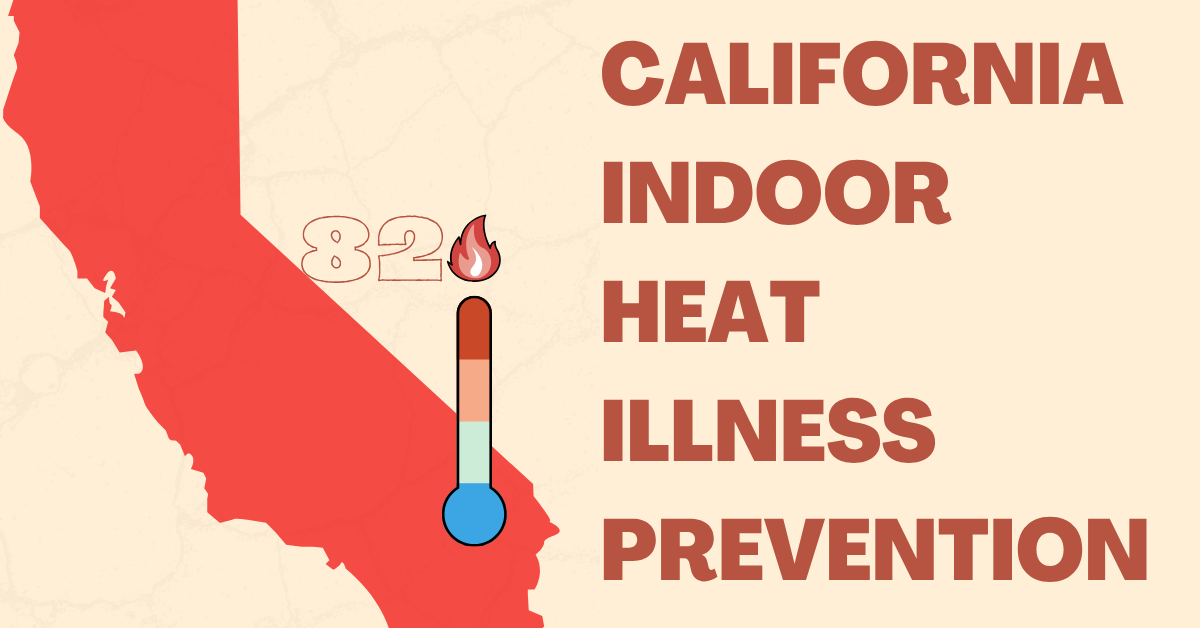
On July 23, 2024, California implemented the California Code of Regulations, Title 8, section 3396, known as “Indoor Heat Illness Prevention Regulation” This regulation mandates that employers adhere to specific safety measures in indoor environments where temperatures reach 82 degrees Fahrenheit or higher. Here are Key elements of the regulation: 1. Workplace Requirements When Temperatures Rise to 82 Degrees a) Establish a Comprehensive Heat Illness Prevention Plan Employers need to draft and put into action a bespoke Indoor Heat Illness Prevention Plan, detailing procedures for water access, acclimatization, cool-down zones, temperature and heat index measurement, and emergency responses. This plan should be specifically designed for the working conditions of each employer’s environment. Recent FAQs published by Cal/OSHA underline the necessity for this plan to be more than a generic restatement of safety orders; it must be tailored to the specific operations of the employer. b) Offer Clean, Cool Water to Employees It is essential for employers to supply employees with clean, cool drinking water at no cost. This water should be easily accessible, ideally located near the workstations and in indoor cool-down zones. If running water isn’t available, each employee should receive one quart of water per hour. Employers should strongly encourage frequent water consumption during high-heat conditions. c) Provide Cool-Down Periods Employers must ensure that employees have access to cool zones for recovery, meal times, and breaks. These areas should maintain a temperature below 82 degrees, shielded from direct sunlight and any significant heat sources, as much as feasible. Employees must be permitted and encouraged to take preventative cool-down breaks in these zones whenever they feel the need to protect themselves from heat. During such breaks, employers should monitor employees’ well-being, encourage them to stay in the cool-down area, and refrain from assigning work until signs of heat-related distress have subsided. Importantly, the rule clarifies that a preventative cool-down rest is akin to the ‘recovery period’ defined in Labor Code subsection 226.7(a), entitling employees to a daily premium pay if they are not given these necessary recovery periods. This amendment aims to facilitate civil wage and hour litigation when such recovery periods are not provided, necessitating compensation with premium pay. d) Acclimatization Monitoring Employers are advised to keenly observe employees who are newly exposed to high-temperature conditions for signs of heat stress during their first two weeks of work. Likewise, any personnel working during a heatwave where engineering controls are not effective should be monitored. e) Training Initiatives Effective training on heat illness risks for both non-supervisory and supervisory staff is required. This instruction should encompass environmental and personal risk factors of heat illness, along with the organization’s procedures for following the indoor heat regulation. Supervisors need to receive further training on managing symptoms of heat illness and how to respond to hot weather advisories. 2. Additional Measures When Temperatures Reach 87 Degrees (or 82 Degrees Under Certain Conditions) Supplementary steps must be taken when temperatures reach 87 degrees, or 82 degrees in situations where employees wear heat-restrictive clothing or work in areas with high radiant heat. a) Monitoring and Documentation It is necessary to measure and document the temperature and heat index whenever it is suspected to reach 87 degrees, or 82 degrees under specific conditions, at the locale where employees are most affected. Measurements should be repeated when expected to rise by at least 10 more degrees. It is crucial to involve employees and any union representatives in this process and maintain records for 12 months or until the next measurements, whichever is later. Employers can choose to forgo actual measurements by assuming certain work areas require control measures and adhering to these immediately. b) Risk Mitigation Strategies Employers must implement a hierarchy of control strategies to lower the risk of heat illnesses. This will likely impose additional costs, especially where cooling systems and building improvements are involved. However, these measures are unnecessary for vehicles with functional air conditioning. Initially, employers should focus on engineering solutions to bring temperatures and heat index levels below the specified thresholds, considering options like isolating hot processes, installing AC systems, and enhancing natural or local exhaust ventilation. If engineering measures are insufficient, administrative strategies should be employed to further lower risk, including acclimatizing workers, rotating tasks, adjusting schedules, and potentially altering work attire. Ultimately, if engineering and administrative controls fall short, personal protective equipment, such as water-cooled garments, should be used as a last resort. 3. Notable Exceptions Certain circumstances exempt workplaces from this regulation: – Brief Indoor Exposures: Workspaces where temperatures don’t exceed 95 degrees for more than 15 minutes every hour are exempt, excluding vehicles without air conditioning and shipping containers. – Telework and Emergency Operations: The rule does not apply to teleworking locations chosen by employees or to emergency operations focused on safeguarding life or property. 4. Penalties Failing to adhere to indoor heat guidelines can lead to significant repercussions for employers, including: Citations and fines from Cal/OSHA for any infractions. Civil lawsuits from employees for heat illness-related damages. Compulsory extra pay to employees for any days they are denied cool-down breaks. Obligatory compensation to nonexempt employees if businesses shut down due to intense heat. Summary Recently enacted Califormia indoor heat regulations establish a comprehensive framework for employers when temperatures reach 82 degrees, requiring tailored Heat Illness Prevention Plans, provision of cool drinking water, and access to cool-down areas for employees. If temperatures climb to 87 degrees or in circumstances with heat-restrictive clothing, more stringent measures such as monitoring, documentation, and control strategies are mandated. Employers must utilize engineering and administrative strategies to mitigate heat risks, with personal protective gear as a last resort. Exceptions exist for brief exposures and specific operations, while non-compliance can lead to substantial penalties, including fines and lawsuits. Ensure your business efficiently meets California’s Indoor Heat Illness Prevention Regulation requirements with hrdeck.com. Our platform includes all necessary plans and training. Take advantage of our tools and resources to minimize legal risks and safeguard against employee claims. Hrdeck is a platform designed for
Staying compliant with California Workplace Violence Prevention Law (Senate Bill 553 & Labor Code 6401.9) is essential to avoid potential citations, fines, or legal issues from Cal/OSHA. This law is designed to enhance workplace safety, specifically targeting the prevention of workplace violence. Non-compliance can result in hefty fines ranging from $18,000 to $25,000 per incident, underscoring the importance of adherence. California SB553 Law Background To address mounting concerns about workplace violence, the California legislature has enacted Senate Bill 553 (SB 553) on September 20, 2023. This new legislation places significant safety obligations on most businesses operating within the state. Starting July 1, 2024, the majority of California employers will be required to develop comprehensive Workplace Violence Prevention Plans (WVPPs), maintain a Violent Incident Log, and facilitate training for their employees. Steps to Comply with SB 553 1. Develop a Comprehensive Workplace Violence Prevention Plan (WVPP): – Your WVPP should be thorough, detailing the responsibilities, hazard identification and assessment methods, corrective procedures, safety training protocols, a retaliation-free reporting system, and compliance measures. This plan can be integrated into your existing Injury and Illness Prevention Program (IIPP). 2. Establish Employee Training: – By July 1, 2024, and annually thereafter, ensure employees are trained on recognizing, preventing, and responding to workplace violence. The training should cover all key requirements outlined in SB 553. 3. Maintain a Workplace Violence Incident Log: – Keep a log of incidents, categorized based on the nature of the violence and the relationship between the offender and the workplace. Personal identifiers should be excluded. 4. Adhere to Recordkeeping Requirements: – Compliance requires meticulous record-keeping for an extended period: – Hazard identification, evaluations, and corrective actions: 5 years – Incident investigations: 5 years – Violent incident logs: 5 years – Training records: At least 1 year Cost of Implementing SB 553 A recent 2023 survey by The National Association of Manufacturers highlights that the compliance burden for small businesses could reach 19% of payroll costs. This estimate does not include state-specific laws like SB 553. Here’s a breakdown of the estimated costs for a small business without existing resources, accounting for the legal requirement to maintain records (plans, incident logs, and training records) for five years. These records may be requested by agencies like Cal/OSHA for enforcement purposes. Cost Components 1. Workplace Violence Prevention Plan: – Customization during initial establishment, updates when new hazards are identified, and annual reviews/updates. 2. Employee Training: – Initial training setup and annual updates. 3. Access and Recordkeeping: – Ensuring employee access to plans, incident logs, and hazard reports online. Maintaining records for 5 years to comply with Cal/OSHA requests. 4. Employee Communication: – Regular communication with employees regarding plans, updates, training, and maintaining logs of such communications. 5. Management of Tasks: -Allocating the right personnel and resources to manage the above tasks, estimated at 20+ hours annually. Your SB553 Implemtation Options You can either: Self-manage Compliance: Find and coordinate all resources and tasks independently. 2. Use an All-in-One Platform: Platforms like hrdeck.com can simplify the process, allowing you to manage all compliance tasks in one place. Cost Comparison Using an all-in-one platform like hrdeck.com can save you both money and time in managing the compliance requirements of California Workplace Violence Prevention Law (SB 553). In conclusion, investing in a comprehensive compliance tools lik HRdeck.com for compliance can help ensure your business meets the necessary requirements while mitigating potential risks and penalties. Make the compliance process smoother and more manageable by using hrdeck.com today. Embrace the tools and resources available to ensure your business meets all California Workplace Violence Prevention Law (SB 553) requirements efficiently. Hrdeck.com is a platform designed for HR teams and small business owners to manage policies, compliance and communication effectively. Our solution aids in complying with policies and regulations, thereby safeguarding from any penalties, liabilities and reputation. Try hrdeck.com now! References: https://nam.org/issues/regulatory-and-legal-reform/cost-of-regulations/#crains https://leginfo.legislature.ca.gov/faces/billTextClient.xhtml?bill_id=202320240SB553 https://www.dir.ca.gov/dosh/Workplace-Violence.html
Running a business in California demands special attention to legal compliance due to the state’s ever-changing and intricate regulatory environment. Both state and local lawmakers frequently introduce new workplace rules that often go beyond federal requirements, creating additional responsibilities for employers. Why California Is Different Constant Legal Updates: California regularly enacts new employment laws to address current workplace trends and expand worker protections, often surpassing federal standards. Multiple Layers of Regulation: Employers must navigate a complex web of rules, including federal laws, state statutes, and local ordinances. Many cities and counties have their own labor standards — such as higher minimum wages or expanded paid leave — that may be stricter than both state and federal laws. California’s employment laws are constantly evolving, often granting workers more protections than federal regulations. For small businesses, this means staying alert and ready to adjust policies and practices to keep up with overlapping local, state, and federal requirements. To help safeguard your company from costly penalties, legal disputes, and reputational damage, this article highlights key laws and compliance areas that every small business should prioritize. Created by HRdeck.com #1 California Wage and Hour Rules Rest Breaks Non-exempt workers in California are entitled to a paid 10-minute rest period for every four hours (or major fraction thereof) they work. These breaks should be scheduled as near as possible to the middle of each work segment. Meal Periods Employees who are not exempt from wage and hour laws must be given a 30-minute unpaid meal break if their shift extends beyond five hours. For shifts longer than ten hours, a second 30-minute meal break is required. Meal breaks must be provided before the end of the fifth hour, and the second before the end of the tenth hour of work. Overtime Pay California law requires that non-exempt employees receive overtime pay at one and a half times their regular rate for all hours worked over 40 in a week, or over 8 in a single day. Double-time pay applies for hours worked beyond 12 in a day or for work exceeding eight hours on the seventh consecutive day. Key Compliance Issues Employers must be diligent in tracking and compensating for: The correct “regular rate of pay” Any business-related expenses Unauthorized or off-the-clock work Penalties for missed, late, or incomplete meal and rest breaks Calculating the Regular Rate of Pay The “regular rate of pay” is not always the same as an employee’s hourly wage. It must include all compensation such as: Non-discretionary bonuses On-call payments Shift differentials Commissions To determine this rate, total all qualifying earnings for the week and divide by the total hours worked in that period. This rate is used not only for overtime but also for calculating paid sick leave and premiums for missed breaks. Consequences of Non-Compliance Errors in wage calculations or failing to provide required breaks can result in wage claims and significant penalties assessed for each pay period in which a violation occurs. Created by HRdeck.com Employers must remain vigilant in applying these standards to avoid costly mistakes and ensure fair treatment of their workforce. #2 Distinguishing Exempt and Nonexempt Employees in California In California, whether an employee is classified as exempt or nonexempt determines their eligibility for overtime pay and other labor protections. Exempt workers are not entitled to overtime or certain wage-and-hour benefits, while nonexempt employees receive these protections under both state and federal law. Criteria for Exempt Status To qualify for exempt status, an employee must satisfy two main requirements: Duties Requirement: The worker’s primary job tasks must fall within specific categories: Executive: The individual must primarily oversee the business or a distinct department, manage at least two full-time staff members, and possess authority over major personnel actions. Administrative: The main responsibilities must involve office or non-manual work related to business management or general operations, with regular use of independent judgment and discretion on key matters. Professional: The role requires specialized knowledge in fields such as science or education, generally obtained through extensive academic training (e.g., attorneys, physicians, certified accountants). California law also recognizes exemptions for certain roles, such as computer professionals, creative workers, and outside sales staff, each with its own criteria. Salary Requirement: The employee must be paid a fixed salary that meets or exceeds the minimum set by state law, regardless of hours worked. The minimum salary for exempt employees is directly linked to the state minimum wage. For full-time exempt status in 2025, the required annual salary is $68,640 (or $5,720 per month), reflecting twice the state minimum wage for a 40-hour workweek. This threshold automatically rises whenever the minimum wage increases. Importance of Proper Classification Incorrectly labeling a worker as exempt when they do not meet both the duties and salary tests can expose employers to serious legal risks. Consequences include liability for unpaid overtime, statutory penalties, and possible damages. Employers must carefully evaluate both the actual job functions and the pay structure to ensure compliance with California’s strict classification standards Employers should regularly review employee classifications to avoid costly mistakes and ensure they are meeting all legal requirements #3 Independent Contractor vs. Employee in California Since January 1, 2020, California’s Assembly Bill 5 (AB 5) has made it significantly more challenging for businesses to classify individuals as independent contractors. The legislation automatically treats workers as employees unless the company can clearly demonstrate that all three criteria of the “ABC test” are satisfied. The ABC Test: Three-Pronged Requirement Under AB 5, the previous multi-factor analysis for determining independent contractor status has been replaced by a strict three-part standard. To classify a worker as an independent contractor, an employer must prove: A) Autonomy: The individual operates free from the company’s control and direction while performing their duties. B) Outside Business Scope: The tasks performed by the worker are not part of the company’s core business activities. C) Independent Trade: The worker is independently established in the same type of work, operating their own business or trade. The “B” element — demonstrating that the worker’s services fall outside the usual

The Pregnant Workers Fairness Act (PWFA), a new federal law effective as of June 2024, mandates that employers offer reasonable accommodations to pregnant employees, those recovering from childbirth, and nursing mothers. Such accommodations are intended to be fair and temporary, such as allowing additional time off for prenatal medical appointments. The U.S. Equal Employment Opportunity Commission’s (EEOC) final rule for the Pregnant Workers Fairness Act is effective from June 18, 2024. Scope of Application The PWFA covers employees, including applicants and former employees, as defined under Title VII of the Civil Rights Act of 1964, amended by the Pregnancy Discrimination Act of 1978. It applies to entities with 15 or more employees, such as public and private employers, unions, employment agencies, and the federal government. However, Louisiana and Mississippi employers and certain religious organizations are not mandated to provide accommodations in some cases. Known Limitations Explained A known limitation is one communicated by an employee or representative to the employer. This includes any minimal or occasional physical or mental condition related to pregnancy, childbirth, or related medical conditions, such as postpartum depression, miscarriage, and lactation. These limitations may intersect with the Americans with Disabilities Act (ADA), providing employees protection under both laws. How Employees request work? Complying with the law is straightforward. Employees simply need to inform you of any limitations, which can be physical or mental conditions related to pregnancy, childbirth, or associated medical issues. These limitations might be significant and ongoing or minor and occasional. Regardless, it is your duty to provide or collaborate on a reasonable accommodation. Employees don’t need to formally reference the law when communicating their needs; a simple statement like, “I’m having trouble getting to work on time due to morning sickness,” is enough. Although paperwork isn’t mandatory, a form to document request can help maintain clear communication Understanding ‘Undue Hardship’ A reasonable accommodation is not required if it imposes significant difficulty or expense on the employer, constituting an undue hardship. Prohibited Actions by Employers Under the PWFA Employers must not: – Fail to provide a reasonable accommodation unless it causes undue hardship. – Force employees to accept undesired accommodations. – Deny job opportunities based on accommodation needs. – Require unnecessary leave if other accommodations can suffice. – Retaliate against employees requesting accommodations or participating in PWFA processes. – Coerce individuals exercising their rights under the PWFA. Reasonable Accommodations — Examples Employer Training Recommendations Employers should train supervisors to efficiently handle accommodation requests. Unlike the ADA, the PWFA may allow temporary suspension of essential functions without specific accommodation language. Employers also cannot insist on medical examinations by a provider they select for those requesting accommodation. Additional Relevant Laws In addition to the PWFA, various laws protect pregnant employees and new parents from discrimination and unfair dismissal. Key regulations include: Title VII of the Civil Rights Act: Prohibits discrimination based on pregnancy, childbirth, or related health conditions. Americans with Disabilities Act (ADA): Obligates employers to provide reasonable accommodations for disabilities, which may encompass certain pregnancy-related issues. Family and Medical Leave Act (FMLA): Offers eligible employees unpaid, job-protected leave for specific medical and family-related reasons. PUMP Act: Requires employers to provide regular breaks and a private area for employees to express breast milk during work hours. Summary The Pregnant Workers Fairness Act (effective June 2024) requires employers to offer reasonable accommodations for pregnant employees, those recovering from childbirth, and nursing mothers. This applies to companies with 15 or more employees, with some exceptions in Louisiana, Mississippi, and religious organizations. Employees can simply state their needs without referencing the law, and employers should avoid imposing undue hardships or retaliating. Suggested accommodations include flexible schedules, extra breaks, and remote work options. Supervisors should be trained to handle requests effectively. Other laws like Title VII, ADA, FMLA, and the PUMP Act also protect pregnant workers, ensuring accommodations and rights at work. Manage policies and compliance easily on hrdeck.com platform. Take advantage of the tools and resources provided to help your business minimize legal risks and protect against employee claims. HRdeck is a platform designed for HR teams and companies to manage policies, compliance and communication effectively. Our solution aids in complying with policies and regulations, thereby safeguarding from any penalties, liabilities and reputation. Try hrdeck.com now! References [1] https://www.eeoc.gov/wysk/what-you-should-know-about-pregnant-workers-fairness-act [2] https://www.eeoc.gov/statutes/pregnant-workers-fairness-act
An employee handbook is an all-inclusive guide that provides staff members with a thorough understanding of your company’s unique policies, key procedures, guidelines and benefits. Essentially, it delineates your legal obligations, highlights employee rights and sets clear expectations for your employees. Moreover, having a well-crafted handbook could provide your business with certain protections against employee grievances and legal actions, such as wrongful termination, harassment, and discrimination claims. Welcome to the Team: Unveiling Your Culture, Mission, and Values A pivotal section of your employee handbook is the orientation of new recruits to your company’s ethos and their place within it. Studies have shown that fostering a sense of belonging and pride can enhance productivity more rapidly. Moreover, your company’s vision and mission statements are included in the introduction, setting the general tone for the employment relationship and forming the foundation for subsequent policies communicated in the handbook. The objective is to answer pertinent questions that help employees understand what sets your company apart, its history, and its passions. Setting Guidelines: What We Expect from Our Employees An employee handbook gives your staff a transparent comprehension of their duties. It acts as a guide to your company’s rules and procedures, clearly explaining who to contact in case of emergencies, how to request time off, and who to consult when there are queries about specific policies. It also highlights employees’ obligations regarding timekeeping, reporting, safety and ensures that every individual is engaged in pushing the company forward by providing easily accessible information. Understanding Your Workplace Rights and Perks Every employer, irrespective of the number of employees or state of operation, is subject to state and federal employment laws. Your handbook should effectively communicate these laws to your employees while showcasing your commitment to compliance. Clearly defined policies of rights and obligations such as Military Leave, state disability leaves, federal FMLA leave and other mandates should be present. Additionally, the handbook should detail the benefits your organization offers such as 401(k), health insurance, paid parental leave, and vacation policies. Promote employee retention by ensuring your staff knows about these policies and their requirements. Employer Preparedness Shielding Your Business Against Employee Claims As an employer, having a well-drafted and legally compliant handbook at your disposal is key. In the event of a lawsuit or similar dispute by a current or former employee, a copy of your handbook can demonstrate that your organization exercised “reasonable care” towards its employees. The signed acknowledgement page confirms that the employee had a chance to acquaint themselves with the policies, ask related questions, knew where to seek help, and agreed to the terms of employment. In summary, an employee handbook outlines clear guidelines and expectations for your employees, providing a foundation for understanding their responsibilities. Additionally, it serves as a safeguard for your business by mitigating the risk of legal issues like wrongful termination, harassment, and discrimination claims. These comprehensive policies not only help maintain a fair and respectful workplace but also ensure that all employees are aware of their rights and obligations, creating a harmonious and legally compliant work environment. Risk mitigation through acknowledgment and updates Having employees sign an acknowledgment that they received, read, and had a chance to ask questions about the handbook is critical evidence that they were informed of policies and complaint options.Regularly updating the handbook to track changes in federal, state, and local laws—and enforcing it consistently—further reduces liability and demonstrates ongoing “reasonable care” in managing the workplace. Quickly create an employee handbook in just minutes by using hrdeck.com today. Take advantage of the tools and resources provided to help your business minimize legal risks and protect against employee claims. Hrdeck is a platform designed for HR teams and companies to manage policies, compliance and communication effectively. Our solution aids in complying with policies and regulations, thereby safeguarding from any penalties, liabilities and reputation. Try hrdeck.com now!

In response to the increasing incidents of workplace violence, the state of California enacted Senate Bill 553 (SB 553) Workplace Violence Prevention in 2024. This legislation mandates that all California workplaces implement a comprehensive policy by July 1, 2024. Employers are required to develop a Workplace Violence Prevention Plan, conduct annual training sessions, and maintain a Violent Incident Log. Who Needs to Comply with SB 553? California SB 553 Law affects all California employers except for healthcare facilities, which are governed by separate standards, and businesses with fewer than 10 employees. Therefore, any company with 10 or more employees and a presence in California must comply, regardless of where their headquarters are located within the state. This extensive scope emphasizes the need for businesses to understand and implement the required measures to meet this new legal mandate. Essential Compliance Steps Under SB 553 With the compliance deadline fast approaching, employers need to concentrate on the three key requirements under SB 553: Let’s delve into each of these components in detail. Penalties for Non-Compliance with SB 553 Cal OSHA is tasked with enforcing SB 553. Non-compliance with SB 553 can result in significant penalties. The Division of Occupational Safety and Health has established penalties ranging from a minimum of $16,131 per violation for serious violations to a maximum of $161,323 per violation for willful or repeated offenses. For detailed information, refer to Cal OSHA penalties page https://www.dir.ca.gov/title8/336.html How to Comply with Key requirements 1. Developing a Workplace Violence Prevention Plan Employers must develop a workplace violence prevention plan as part of key requirements of SB 553 Law. This plan should include: The plan should be easily accessible to employees, authorized representatives, and regulatory bodies at all times. Cal/OSHA has released a FREE template, the Model Workplace Violence Prevention Plan (WVPP), to help employers create their own plans. This template shows how complex and time-consuming this task can be. 2. Maintain a Violent Incident Log Employers must keep a detailed log of all workplace violence incidents, which is crucial for tracking trends, identifying areas for improvement, and ensuring compliance with SB 553. Each entry in the log should include: Maintaining this detailed log helps to recognize patterns and implement preventive measures to avoid recurrence, thus creating a safer workplace environment. 3. Establish Employee Training Employee training is critical to the success of the Workplace Violence Prevention Plan. Employers must provide both initial and ongoing training that covers: – Familiarizing employees with the plan, including how to obtain a copy and participate in its development and implementation.– Explaining the definitions and requirements of Labor Code section 6401.9.– Detailing how to report workplace violence incidents without fear of retaliation.– Educating employees about job-specific violence hazards and preventive measures.– Clarifying the purpose of the violent incident log and how to access related records. Training should be updated whenever new hazards are identified or significant changes to the plan occur. Ensuring that all employees are well-informed about their roles in maintaining a safe workplace is fundamental to the plan’s success. Additional SB 553 Requirements In addition to the primary requirements, employers must ensure that their Workplace Violence Prevention Plan integrates seamlessly with their broader Injury and Illness Prevention Program, if one exists. Employers should also: – Make records, such as the violent incident log and training documentation, readily available to employees and their representatives upon request. – Follow specific procedures for issuing, renewing, and enforcing restraining orders related to workplace violence. These additional steps help to ensure a comprehensive approach to workplace safety and compliance with SB 553. Avoid Penalties & Comply with California SB 553 Avoid costly penalties and ensure a safer workplace and begin your compliance journey today. With the right approach and tools, you can transform compliance into an opportunity to enhance workplace safety and boost employee well-being. SB 553 Compliance Made Easy – hrdeck.com Employers can streamline compliance with SB 553 by using hrdeck.com’s specialized software. Our platform simplifies the complexities of compliance and ensures that organizations stay ahead of requirements by providing a secure, anonymous way for employees to report incidents of workplace violence. Here’s how hrdeck.com meets SB 553 requirements: – Tailored Plan Development: hrdeck.com makes it easy to establish, implement, and maintain a personalized Workplace Violence Prevention Plan. The platform helps identify responsible personnel and enables seamless coordination with other stakeholders, simplifying the planning process. – Violent Incident Logging: Our software provides a centralized repository for logging all workplace violence incidents. Detailed entries—including the date, time, location, and description of each incident—are captured, facilitating trend analysis and identifying areas for improvement. – Employee Training Resources: hrdeck.com includes comprehensive SB 553 training for all employees. This ensures that your team is well-equipped to handle workplace violence situations effectively and in compliance with the law. By leveraging hrdeck.com’s fully-featured platform, employers can not only meet SB 553 requirements but also enhance workplace safety and employee well-being . . . Hrdeck is a platform designed for HR teams and companies to manage policies, compliance and communication effectively. Our solution aids in complying with policies and regulations, thereby safeguarding from any penalties, liabilities and reputation. Try hrdeck.com now!
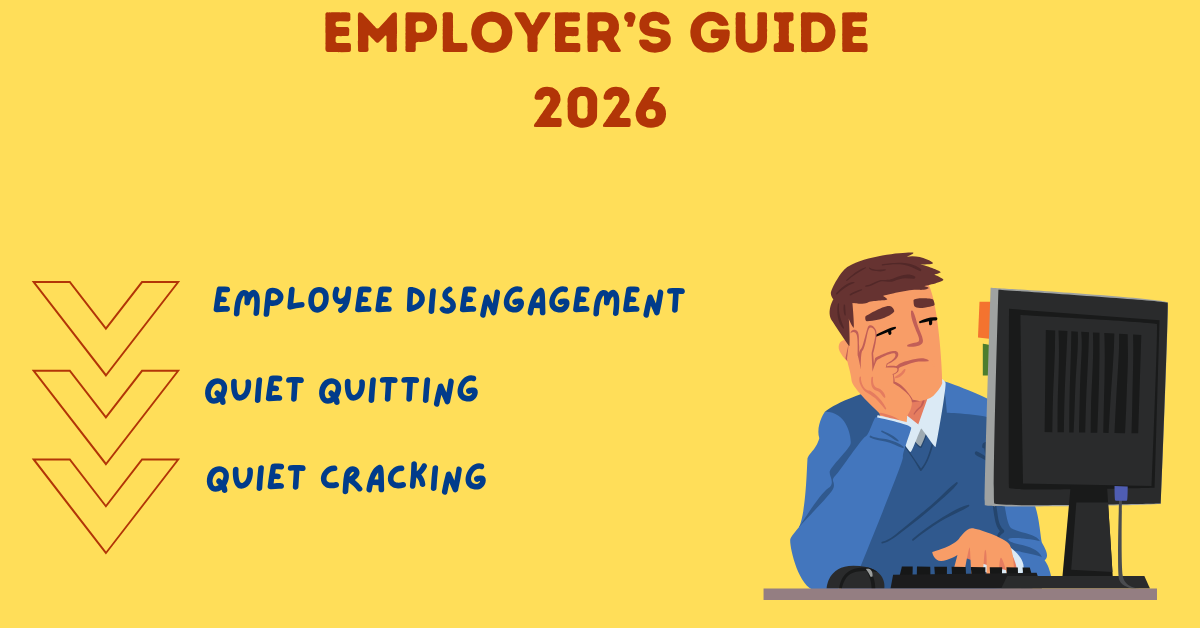
Summary Employee disengagement has reached alarming levels, costing the U.S. economy approximately $2 trillion in lost productivity annually. This staggering figure represents the cumulative impact of workers who are emotionally disconnected from their roles, performing at minimum capacity, or experiencing what researchers now term “quiet cracking.”[1] Only 31% of U.S. employees are currently engaged at work, matching the lowest levels seen in a decade. Meanwhile, 17% are actively disengaged, representing approximately 1.6 million workers per percentage point. The decline has been particularly pronounced since the COVID-19 pandemic, with engagement levels dropping from a peak of 36% in early 2020.[2][1] Understanding the Three Phenomena Employee Disengagement Traditional disengagement manifests as emotional detachment from work, where employees fulfill basic job requirements but lack passion, energy, or commitment. These workers often exhibit poor attitudes toward customers and colleagues, display lethargy, make cynical comments, and frequently call in sick.[3] Disengaged employees are 18% less productive than their engaged counterparts and have 37% higher absenteeism rates. They also contribute to 18% lower sales volume and 23% lower profitability for their organizations.[4][5][6] Quiet Quitting Quiet quitting describes employees who perform only the bare minimum required by their job description, refusing to go above and beyond or take on additional responsibilities. Unlike traditional disengagement, these workers still fulfill their contractual obligations but have mentally withdrawn from any extra effort.[7] Research from Stevens Institute reveals that quiet quitting often stems from reduced perception of control over circumstances. Employees experiencing uncertainty — whether from economic instability, organizational changes, or personal challenges — are more likely to scale back their efforts as a protective mechanism.[8] Quiet Cracking The newest phenomenon, “quiet cracking,” represents a persistent state of workplace unhappiness leading to disengagement, poor performance, and plans to quit. Unlike quiet quitting, this decline in productivity isn’t intentional but results from feeling worn down and unappreciated.[9] Approximately 54% of employees experience some level of quiet cracking, with 20% reporting frequent or constant workplace unhappiness. This phenomenon has contributed to an estimated $438 billion in global productivity losses and represents a significant escalation from quiet quitting behaviors.[10][9] Root Causes and Warning Signs Primary Drivers of Disengagement Organizational Culture Issues (32% of responses):[1] Isolated or impersonal workplace environments Lack of emotional connection to teams Particularly pronounced among Gen Z workers (44%) and remote employees (41%) Leadership Transparency Problems (29% of responses):[1] Unclear, dishonest, or inconsistent communication from leaders Lack of two-way trust and involvement in decision-making Insufficient visibility into strategic direction Resource Investment Deficiencies (25% of responses):[1] Underinvestment in compensation, tools, and staffing Inadequate human and financial resources Poor follow-through on promised improvements Performance Management Gaps (14% of responses):[1] Lack of feedback, recognition, and development opportunities Absent or ineffective one-on-one meetings Unclear accountability structures Early Warning Signs to Monitor Behavioral Changes:[11][12] Decreased initiative and reluctance to volunteer for projects Lower productivity with missed deadlines and extended task completion times Irritable attitude and increased conflict with colleagues Careless mistakes and declining work quality Physical or mental absence despite being present at work Engagement Indicators:[12][11] Minimal participation in team meetings or discussions Avoiding team-building activities and optional events Loss of focus and increased personal device usage during work hours Making excuses when confronted about performance issues Withdrawal from management and reduced communication with supervisors The Financial Impact Direct Costs Per-Employee Impact: Each disengaged employee costs organizations approximately $3,400 for every $10,000 in salary (34%). For a typical mid-size company with 1,000 employees at $50,000 average salary, this translates to $1.7 million annually in lost productivity from disengaged workers alone.[13] Replacement Costs: When disengaged employees eventually leave, replacement costs range from 6–9 months of the departing employee’s salary. For specialized roles, this can reach 100–150% of annual compensation.[14][15] Organizational Consequences Productivity Losses:[6][4] 18% lower productivity compared to engaged teams 37% higher absenteeism rates 81% higher absenteeism for disengaged teams specifically Revenue Impact:[5] 18% lower sales volume 23% lower profitability Increased customer service complaints and reduced satisfaction scores Cultural Deterioration:[5] Contagious effect spreading negative attitudes across teams Erosion of company culture and trust Increased turnover intention among remaining engaged employees Monitoring and Assessment Strategies Employee Survey Best Practices Survey Design Principles:[16][17] Establish clear objectives and communicate the survey’s purpose transparently Secure anonymity and confidentiality to encourage honest responses Customize questions to your organization’s specific context and industry Include engagement drivers such as role clarity, recognition, and development opportunities Optimal Survey Frequency:[18] Quarterly pulse surveys for tracking engagement trends Annual comprehensive surveys for in-depth analysis Post-incident surveys following significant organizational changes Exit interviews to understand departure reasons Key Questions to Include:[2][1] “I know what is expected of me at work” (only 46% strongly agree) “Someone at work seems to care about me as a person” (39% strongly agree) “Someone at work encourages my development” (30% strongly agree) “My opinions count at work” (28% strongly agree) Behavioral Monitoring Techniques Regular One-on-One Meetings:[19][20] Schedule consistent weekly or bi-weekly check-ins Create psychologically safe environments for honest conversation Practice active listening and validate employee concerns Document patterns in feedback and behavior changes Performance Metrics Tracking:[12] Monitor productivity trends and quality indicators Track absenteeism patterns and leave usage Assess participation in voluntary activities and meetings Review customer feedback and satisfaction scores Prevention and Intervention Strategies Immediate Actions for Leaders Enhance Communication and Transparency:[19][1] Provide regular updates on organizational direction and changes Explain the “why” behind decisions and strategic initiatives Create formal feedback channels and respond to employee input within established timeframes Hold regular town halls and open forums for questions and concerns Strengthen Recognition and Development:[21] Implement consistent recognition programs both monetary and verbal Offer learning and development opportunities including training, conferences, and skill-building Create clear career advancement paths with specific requirements and timelines Provide regular performance feedback beyond annual reviews Long-term Cultural Changes Build Psychological Safety:[22][19] Train managers in emotional intelligence and empathetic leadership Normalize vulnerability and open discussion of challenges Establish clear policies protecting employees who raise concerns Model accountability at leadership levels Improve Work-Life Balance:[21] Enforce boundaries around after-hours communication and workload Promote mental health resources and stress management