Summary
Employee disengagement has reached alarming levels, costing the U.S. economy approximately $2 trillion in lost productivity annually. This staggering figure represents the cumulative impact of workers who are emotionally disconnected from their roles, performing at minimum capacity, or experiencing what researchers now term “quiet cracking.”[1]
Only 31% of U.S. employees are currently engaged at work, matching the lowest levels seen in a decade. Meanwhile, 17% are actively disengaged, representing approximately 1.6 million workers per percentage point. The decline has been particularly pronounced since the COVID-19 pandemic, with engagement levels dropping from a peak of 36% in early 2020.[2][1]
Understanding the Three Phenomena
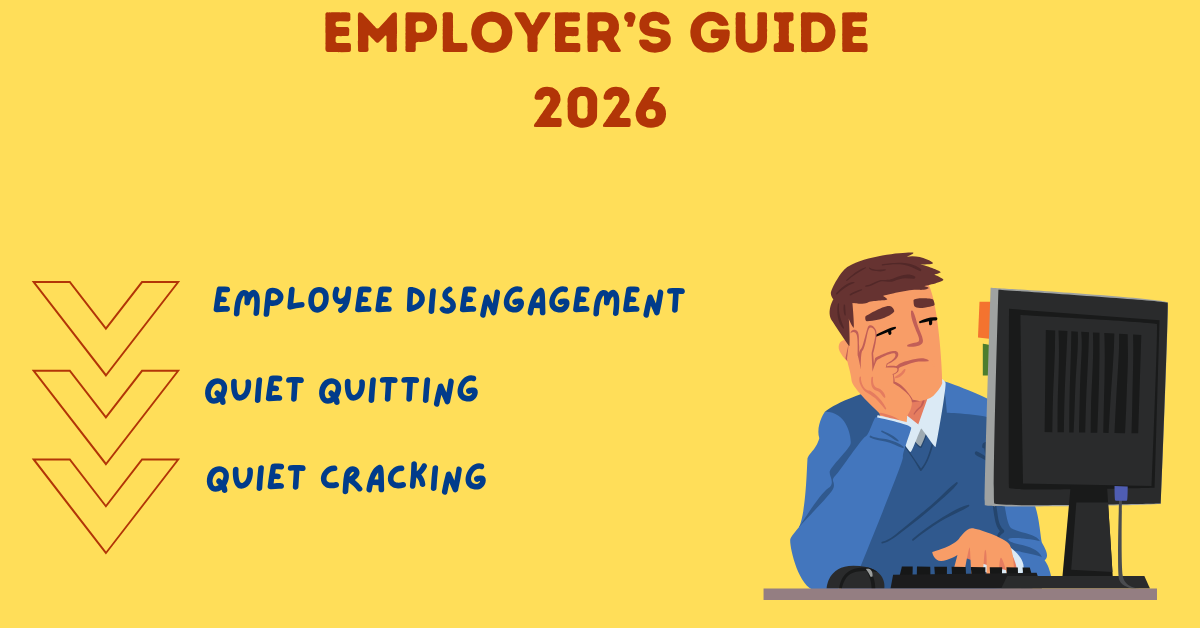
Employee Disengagement
Traditional disengagement manifests as emotional detachment from work, where employees fulfill basic job requirements but lack passion, energy, or commitment. These workers often exhibit poor attitudes toward customers and colleagues, display lethargy, make cynical comments, and frequently call in sick.[3]
Disengaged employees are 18% less productive than their engaged counterparts and have 37% higher absenteeism rates. They also contribute to 18% lower sales volume and 23% lower profitability for their organizations.[4][5][6]
Quiet Quitting
Quiet quitting describes employees who perform only the bare minimum required by their job description, refusing to go above and beyond or take on additional responsibilities. Unlike traditional disengagement, these workers still fulfill their contractual obligations but have mentally withdrawn from any extra effort.[7]
Research from Stevens Institute reveals that quiet quitting often stems from reduced perception of control over circumstances. Employees experiencing uncertainty — whether from economic instability, organizational changes, or personal challenges — are more likely to scale back their efforts as a protective mechanism.[8]
Quiet Cracking
The newest phenomenon, “quiet cracking,” represents a persistent state of workplace unhappiness leading to disengagement, poor performance, and plans to quit. Unlike quiet quitting, this decline in productivity isn’t intentional but results from feeling worn down and unappreciated.[9]
Approximately 54% of employees experience some level of quiet cracking, with 20% reporting frequent or constant workplace unhappiness. This phenomenon has contributed to an estimated $438 billion in global productivity losses and represents a significant escalation from quiet quitting behaviors.[10][9]
Root Causes and Warning Signs
Primary Drivers of Disengagement
Organizational Culture Issues (32% of responses):[1]
- Isolated or impersonal workplace environments
- Lack of emotional connection to teams
- Particularly pronounced among Gen Z workers (44%) and remote employees (41%)
Leadership Transparency Problems (29% of responses):[1]
- Unclear, dishonest, or inconsistent communication from leaders
- Lack of two-way trust and involvement in decision-making
- Insufficient visibility into strategic direction
Resource Investment Deficiencies (25% of responses):[1]
- Underinvestment in compensation, tools, and staffing
- Inadequate human and financial resources
- Poor follow-through on promised improvements
Performance Management Gaps (14% of responses):[1]
- Lack of feedback, recognition, and development opportunities
- Absent or ineffective one-on-one meetings
- Unclear accountability structures
Early Warning Signs to Monitor
- Decreased initiative and reluctance to volunteer for projects
- Lower productivity with missed deadlines and extended task completion times
- Irritable attitude and increased conflict with colleagues
- Careless mistakes and declining work quality
- Physical or mental absence despite being present at work
Engagement Indicators:[12][11]
- Minimal participation in team meetings or discussions
- Avoiding team-building activities and optional events
- Loss of focus and increased personal device usage during work hours
- Making excuses when confronted about performance issues
- Withdrawal from management and reduced communication with supervisors
The Financial Impact
Direct Costs
Per-Employee Impact: Each disengaged employee costs organizations approximately $3,400 for every $10,000 in salary (34%). For a typical mid-size company with 1,000 employees at $50,000 average salary, this translates to $1.7 million annually in lost productivity from disengaged workers alone.[13]
Replacement Costs: When disengaged employees eventually leave, replacement costs range from 6–9 months of the departing employee’s salary. For specialized roles, this can reach 100–150% of annual compensation.[14][15]
Organizational Consequences
- 18% lower productivity compared to engaged teams
- 37% higher absenteeism rates
- 81% higher absenteeism for disengaged teams specifically
Revenue Impact:[5]
- 18% lower sales volume
- 23% lower profitability
- Increased customer service complaints and reduced satisfaction scores
Cultural Deterioration:[5]
- Contagious effect spreading negative attitudes across teams
- Erosion of company culture and trust
- Increased turnover intention among remaining engaged employees
Monitoring and Assessment Strategies
Employee Survey Best Practices
Survey Design Principles:[16][17]
- Establish clear objectives and communicate the survey’s purpose transparently
- Secure anonymity and confidentiality to encourage honest responses
- Customize questions to your organization’s specific context and industry
- Include engagement drivers such as role clarity, recognition, and development opportunities
Optimal Survey Frequency:[18]
- Quarterly pulse surveys for tracking engagement trends
- Annual comprehensive surveys for in-depth analysis
- Post-incident surveys following significant organizational changes
- Exit interviews to understand departure reasons
Key Questions to Include:[2][1]
- “I know what is expected of me at work” (only 46% strongly agree)
- “Someone at work seems to care about me as a person” (39% strongly agree)
- “Someone at work encourages my development” (30% strongly agree)
- “My opinions count at work” (28% strongly agree)
Behavioral Monitoring Techniques
Regular One-on-One Meetings:[19][20]
- Schedule consistent weekly or bi-weekly check-ins
- Create psychologically safe environments for honest conversation
- Practice active listening and validate employee concerns
- Document patterns in feedback and behavior changes
Performance Metrics Tracking:[12]
- Monitor productivity trends and quality indicators
- Track absenteeism patterns and leave usage
- Assess participation in voluntary activities and meetings
- Review customer feedback and satisfaction scores
Prevention and Intervention Strategies
Immediate Actions for Leaders
Enhance Communication and Transparency:[19][1]
- Provide regular updates on organizational direction and changes
- Explain the “why” behind decisions and strategic initiatives
- Create formal feedback channels and respond to employee input within established timeframes
- Hold regular town halls and open forums for questions and concerns
Strengthen Recognition and Development:[21]
- Implement consistent recognition programs both monetary and verbal
- Offer learning and development opportunities including training, conferences, and skill-building
- Create clear career advancement paths with specific requirements and timelines
- Provide regular performance feedback beyond annual reviews
Long-term Cultural Changes
Build Psychological Safety:[22][19]
- Train managers in emotional intelligence and empathetic leadership
- Normalize vulnerability and open discussion of challenges
- Establish clear policies protecting employees who raise concerns
- Model accountability at leadership levels
Improve Work-Life Balance:[21]
- Enforce boundaries around after-hours communication and workload
- Promote mental health resources and stress management programs
- Offer flexible work arrangements where operationally feasible
- Monitor and address burnout indicators proactively
Targeted Interventions for At-Risk Employees
Individual Support Strategies:[20][23]
- Conduct skill assessments to identify training needs
- Reassign responsibilities to better match employee strengths and interests
- Provide additional resources or support to reduce overwhelming workloads
- Explore internal mobility options to reignite engagement
Team-Level Interventions:[24]
- Facilitate team-building activities focused on collaboration and trust
- Address interpersonal conflicts before they escalate
- Clarify roles and responsibilities to reduce confusion and overlap
- Celebrate team achievements and milestones regularly
Implementation Roadmap
Press enter or click to view image in full size

Phase 1: Assessment (Months 1–2)
- Conduct comprehensive engagement survey
- Analyze current turnover and performance data
- Identify high-risk departments and individuals
- Establish baseline metrics for tracking progress
Phase 2: Leadership Development (Months 2–4)
- Train managers in recognizing disengagement signs
- Implement regular one-on-one meeting protocols
- Develop communication standards and feedback mechanisms
- Create accountability measures for leadership behavior
Phase 3: System Implementation (Months 3–6)
- Launch recognition and development programs
- Establish clear career progression pathways
- Implement work-life balance policies
- Create feedback loops and response protocols
Phase 4: Monitoring and Adjustment (Ongoing)
- Conduct quarterly pulse surveys
- Track engagement metrics and productivity indicators
- Adjust programs based on employee feedback
- Share progress updates with the organization
Conclusion
Employee disengagement, quiet quitting, and quiet cracking represent escalating threats to organizational performance and culture. The $2 trillion annual cost to the U.S. economy underscores the urgent need for proactive intervention strategies.[1]
Success requires a comprehensive approach combining regular monitoring through surveys and behavioral observation, leadership development focused on emotional intelligence and communication, and systematic changes to organizational culture and policies. Organizations that prioritize employee engagement through transparency, development opportunities, and genuine care for worker well-being will not only reduce the substantial costs of disengagement but also position themselves for sustainable competitive advantage.
The key lies in early detection and swift action. By implementing robust monitoring systems and empowering managers with the tools and training to address disengagement proactively, employers can transform their workplaces from sources of frustration into environments where employees thrive and contribute their best efforts.
HRdeck is a platform designed for HR teams and companies to manage policies, compliance and communication effectively. Our solution aids in complying with policies and regulations, thereby safeguarding from any penalties, liabilities and reputation.
Try hrdeck.com now!
References:
1. https://fortune.com/2025/02/05/revenge-quitting-2025/
3. https://www.linkedin.com/pulse/employee-disengagement-costs-2025-statistics-solutions-suhail-vgd5f
4. https://www.excelforce.com/insights/quiet-quitting-vs.-loud-quitting-hr-guide
5. https://www.yahoo.com/news/articles/quiet-cracking-spreading-offices-half-153018751.html
6. https://www.activtrak.com/blog/cost-of-disengaged-employees/
7. https://www.cnbc.com/2025/08/25/quiet-quitting-is-a-past-trend-why-workers-are-quiet-cracking.html
8. https://www.hrdive.com/news/what-is-quiet-cracking-worker-trend/745384/
9. https://www.workvivo.com/blog/neglecting-employee-engagement-cost/
10. https://phys.org/news/2025-08-employees-quiet.html
11. https://www.talentlms.com/research/quiet-cracking-workplace-survey
12. https://www.contactmonkey.com/blog/cost-of-employee-disengagement
13. https://www.linkedin.com/news/story/1-in-5-workers-are-quiet-cracking-6495204/
14. https://www.quantumworkplace.com/future-of-work/employee-engagement-trends
15. https://pmc.ncbi.nlm.nih.gov/articles/PMC3128441/
16. https://www.engageemployee.com/blog/the-real-cost-of-employee-disengagement
17. https://www.gallup.com/workplace/654911/employee-engagement-sinks-year-low.aspx
18. https://pmc.ncbi.nlm.nih.gov/articles/PMC5009902/
20. https://www.cultureamp.com/blog/employee-engagement-2024
22. https://www.peoplekeep.com/blog/employee-retention-the-real-cost-of-losing-an-employee
23. https://www.formaloo.com/blog/7-latest-trends-in-employee-engagement-for-2024-beyond
24. https://www.driveresearch.com/market-research-company-blog/employee-survey-best-practices/
25. https://www.indeed.com/career-advice/career-development/disengaged-employees
26. https://seniorexecutive.com/preventing-quiet-quitting-employee-engagement/
27. https://fisher.osu.edu/blogs/leadreadtoday/insight-how-design-effective-employee-engagement-surveys
30. https://pmc.ncbi.nlm.nih.gov/articles/PMC8696015/
31. https://www.activtrak.com/blog/disengaged-employee-behaviors/
32. https://teambuilding.com/blog/quiet-quitting
33. https://www.contactmonkey.com/blog/employee-survey-best-practices
34. https://www.qualtrics.com/experience-management/employee/disengaged-employees/
35. https://deliberatedirections.com/quiet-quitting-the-silent-epidemic-with-sonja-price/
36. https://workforce.com/news/10-best-practices-for-employee-surveys
37. https://www.activtrak.com/blog/how-to-prevent-quiet-quitting/