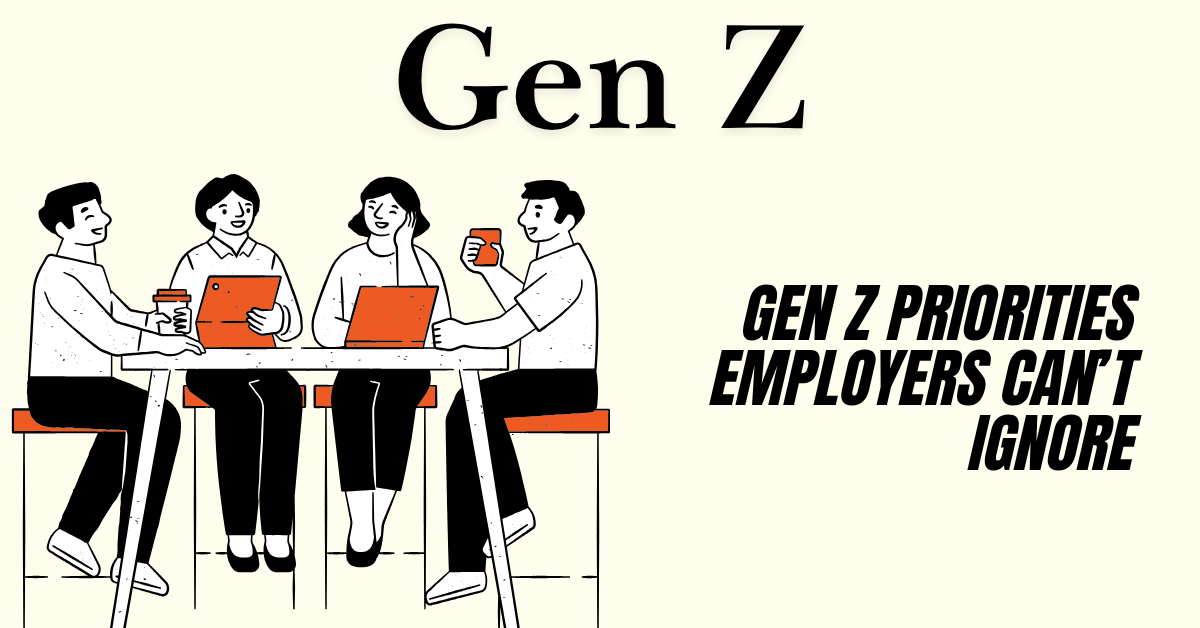
As Generation Z reshapes the future of work, employers need to move beyond buzzwords and headlines and adopt a more evidence-based approach to understanding what this generation actually wants from work. The old caricatures of Gen Z as lazy, entitled, distracted, or disloyal are not just inaccurate; they can actively damage recruiting, manager credibility, retention, and internal mobility.[4][5][6][2]
The core misunderstanding is treating Gen Z actions as character flaws rather than logical responses to a new world of work. They entered the workforce after formative years shaped by economic turmoil, pandemic disruption, widespread digitization, and a labor market that often seemed to offer less stability than earlier generations were promised. SHRM summarizes this context well, noting that Gen Z grew up with a well-being mindset, spent most of their lives online, and is especially anxious about the rise of AI at work.[2][3]
That context matters enormously. When a younger employee questions a process, asks for more feedback, values flexibility, or wants to understand why their work matters, many employers still interpret that as defiance or fragility. In reality, much of that behavior reflects a generation shaped by optimization, instant access to information, and skepticism toward outdated systems that waste time or feel disconnected from real outcomes.[7][4][1][2]
The data increasingly shows that employers have a perception problem as much as a Gen Z problem. Forage reports that nearly a third of hiring managers say they avoid hiring Gen Z in favor of older generations, and 74% of managers and business leaders say they find Gen Z more challenging to work with than other generations. Predictive Index adds that more than half of Gen Z employees report receiving feedback from managers that feels inaccurate or misaligned with how they see themselves, and 62% say they have been overlooked for career opportunities due to misperceptions.[4][1]
That gap between employer assumptions and employee reality is where retention problems begin. If a manager assumes a Gen Z employee lacks commitment, that manager is less likely to invest in coaching, stretch work, or trust-building, and the employee is more likely to disengage or leave. Misunderstanding becomes a self-fulfilling cycle: employers stereotype Gen Z as hard to manage, then manage them poorly, then use the resulting friction as proof the stereotype was true.[1][4]
Why employers misunderstand Gen Z
A useful starting point is SHRM’s framing that generational behavior should be understood as “trends, not traits.” That distinction matters because it shifts the conversation away from moral judgments and toward formative conditions: what people grew up with, what they were taught to expect, and what they have learned about risk, technology, work, and identity. Employers who ignore that context often default to hearsay, anecdote, and intergenerational comparison instead of evidence.[2][4]
One major source of misunderstanding is that Gen Z’s preferences often collide with older managerial norms. Deloitte’s 2025 Gen Z and Millennial Survey found that Gen Z is highly focused on growth and learning, but only 6% say their primary career goal is to reach a leadership position. To some employers, that can sound like a lack of ambition, but Deloitte says the better interpretation is that Gen Z is balancing money, meaning, and well-being rather than organizing life around a single ladder-climbing definition of success.[3][2]
Another source of confusion is the way Gen Z communicates expectations. This generation is more likely to say directly that a process is inefficient, that they want faster feedback, or that they are not willing to sacrifice health and life boundaries for unclear rewards. Older leaders can hear that as entitlement, yet SHRM’s reporting suggests those expectations are tied to a well-being mindset and to a broader reassessment of what work should demand from people.[7][1][2]
Technology is another double-edged factor. Employers often assume Gen Z is automatically technologically fluent because they grew up online, but Cloudbooking notes that digital-native assumptions are often overstated and that many Gen Z workers are more comfortable with consumer technology than workplace software. That means employers sometimes make two mistakes at once: they stereotype Gen Z as screen-addicted while also underinvesting in structured workplace training because they assume younger workers will simply “figure it out.”[8][9][4][2]
A third misunderstanding comes from confusing caution with weakness. SHRM reports that Gen Z has significant AI anxiety, and cites research showing that 35% of U.S. workers say they are concerned AI will displace their job in the next five years, while 77% of HR managers say they have not been tasked with assessing AI’s impact on work. For a generation entering the workforce as automation, generative AI, and rapid platform shifts reshape jobs, asking hard questions about future relevance is not irrational; it is prudent.[3][2]
Financial context also matters. Deloitte found that 48% of Gen Z respondents in its 2025 global survey did not feel financially secure. When employers interpret salary questions, side-hustle thinking, or strong interest in benefits as greed, they may be ignoring the fact that many younger workers are making career decisions under real financial strain rather than abstract idealism.[6][3]
The last major driver of misunderstanding is simple narrative inertia. Every incoming generation is labeled soft, impatient, self-absorbed, or unrealistic at first, and Gen Z is now receiving the same treatment that millennials received years ago. Employers who rely on cultural shorthand instead of data are not really responding to Gen Z; they are reacting to a recycled management story.[5][9][4]
The stereotypes that keep showing up — and what the data says instead
One of the most common stereotypes is that Gen Z lacks work ethic. Forage lists “Gen Z doesn’t want to work” as one of the most common myths, while GWI says headlines around “quiet quitting” have painted Gen Z with a broad brush that makes them appear lazy when the data shows a more pragmatic relationship to work. In many cases, what employers call weak work ethic is actually a stronger expectation that effort should connect to outcomes, growth, and human sustainability.[6][4][2][3]
A related stereotype is that Gen Z only cares about money. Deloitte’s 2025 survey tells a more nuanced story: Gen Z career decisions are shaped by money, meaning, and well-being, and these factors are tightly interconnected rather than mutually exclusive. Roughly nine in 10 Gen Z respondents, or 89%, say a sense of purpose is important to their job satisfaction and well-being, which makes it hard to argue that compensation is their only lens.[4][3]
Another persistent stereotype is that Gen Z is disloyal and unwilling to stay anywhere for long. That claim often ignores the possibility that job movement can be a rational response to poor management, low internal mobility, weak development, or a mismatch between recruitment messaging and lived experience. If younger workers do not see learning, feedback, or progress where they are, leaving is often less a sign of generational disloyalty than a sign that the employer’s development model is not delivering.[5][1][3][4]
Employers also frequently stereotype Gen Z as antisocial or poor at collaboration because they grew up on screens. Yet Cloudbooking notes that Gen Z workers are highly collaborative and often seek out opportunities to work in teams, while also pointing out that younger workers may find working from home more difficult because of home-life pressures. That suggests the problem is not that Gen Z rejects collaboration; it is that employers often misunderstand the conditions under which collaboration works best for them.[8][5]
A fourth stereotype is that Gen Z is “too sensitive” for feedback. The more evidence-based interpretation is that Gen Z tends to respond poorly to vague, delayed, generic, or mismatched feedback rather than to accountability itself. Predictive Index found that 54% of Gen Z employees receive feedback they feel is inaccurate or misaligned, and 53% want more meaningful feedback from managers.[10][7][1]
That finding is important because it moves the issue away from fragility and toward management quality. If employees believe they are not being seen accurately, they are likely to distrust reviews, disengage from development conversations, and question whether advancement decisions are fair. In other words, employer misunderstanding can show up inside the feedback process itself.[1]
Another stereotype is that Gen Z is unrealistic about work-life balance. Yet SHRM says Gen Z grew up with a strong well-being mindset and asks a basic question about work: what am I willing to sacrifice for my job? Framed that way, the preference for boundaries is not evidence of lower standards; it is evidence that younger workers are more willing to challenge a work model that often normalized chronic stress without guaranteeing security, loyalty, or advancement in return.[9][2][3]
Finally, there is a stereotype that Gen Z is obsessed with customization because it thinks it is special. SHRM explicitly challenges that interpretation, arguing that Gen Z has become accustomed to technology that helps people find solutions that are more useful and personalized to their needs. What can look like entitlement may actually be an expectation that systems, tools, learning, and communication should be designed with more precision and less waste.[2]
What Gen Z actually wants from work
If the stereotypes are not telling the full story, what is? Across the strongest current sources, four themes keep appearing: purpose, learning, communication, and well-being.[11][3][2]
Start with purpose. Deloitte found that 89% of Gen Z respondents consider purpose important to job satisfaction and well-being, and SHRM’s 2026 preview on engaging Gen Z says employers should begin by helping younger workers understand not just what they are doing but why it matters and how it connects to something bigger. That does not mean every Gen Z employee expects a world-changing role, because Deloitte notes that purpose is subjective and can include earning money, learning skills, or gaining resources to create change outside work.[11][3]
The practical takeaway is that employers should stop assuming “purpose” means only social impact rhetoric. For some Gen Z employees, meaningful work is mission alignment; for others, it is skill growth, visible contribution, or a role that supports a stable and healthy life. Employers that define purpose too narrowly often miss what the employee is actually trying to achieve.[11][3]
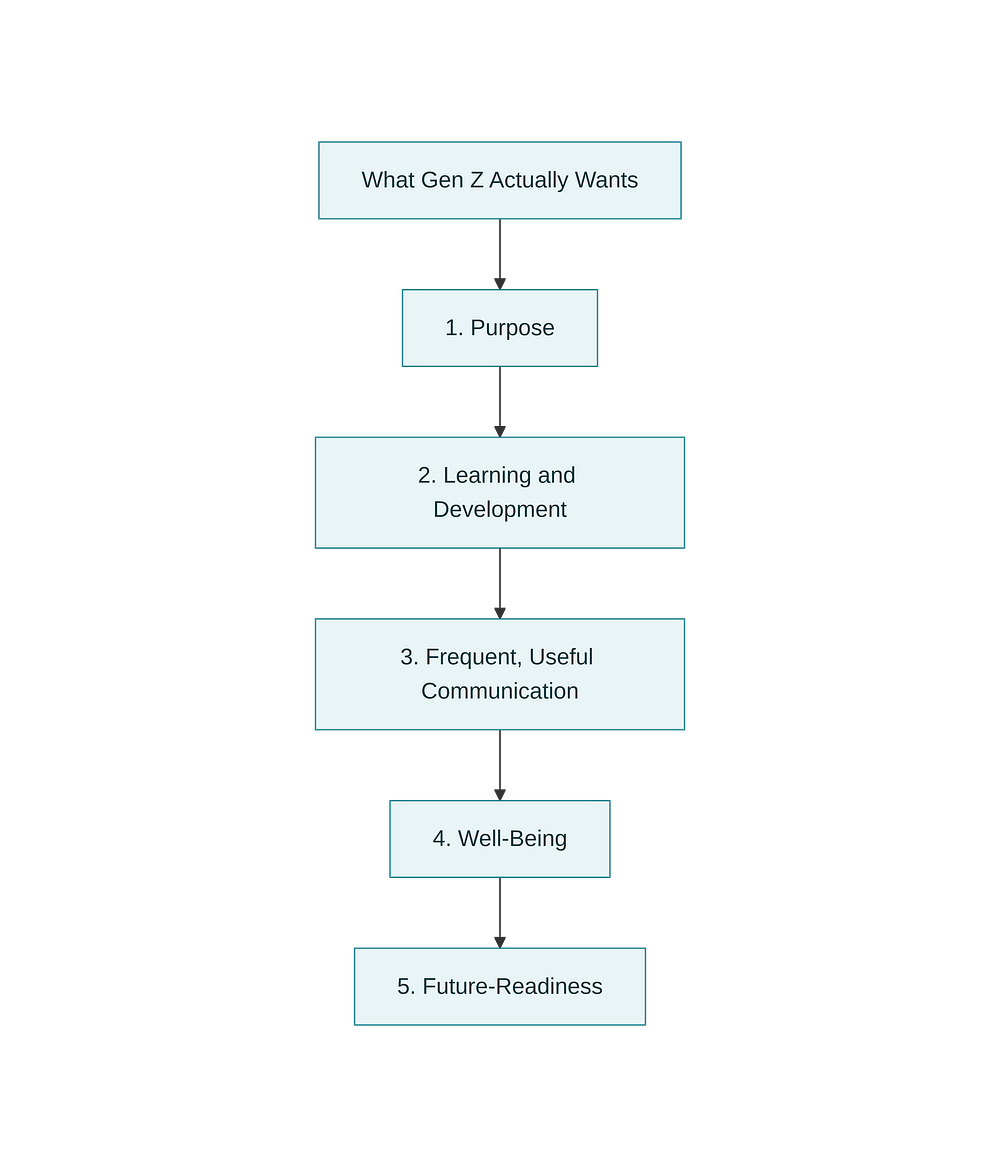
The second theme is learning and development. Deloitte says learning and development ranks among the top reasons Gen Z chooses to work for an employer, and that many Gen Z employees want managers to provide guidance, inspiration, and mentorship rather than just oversight of daily tasks. That is a crucial point because many organizations still hire entry-level talent into heavily fragmented roles with limited context and then wonder why motivation fades.[12][3]
The third theme is frequent, useful communication. Macorva cites research indicating that many Gen Z employees prefer coaching-style conversations over conventional performance assessments, while Predictive Index found that 53% want more meaningful feedback and 56% want clearer career-growth paths. Gen Z does not simply want more praise; it wants more signal.[10][1]
That aligns with the draft you provided, and the underlying logic is strong. A generation raised in an environment of instant access and rapid feedback loops will naturally find quarterly or annual silence from managers misaligned with how effective systems normally work. Employers often misread that expectation as impatience, when it may be better understood as a demand for clarity.[10][1][2]
The fourth theme is well-being. SHRM says Gen Z grew up with mindfulness and health more central to identity, while Deloitte shows that well-being and purpose are linked, with Gen Z respondents who report positive mental well-being far more likely to say their job lets them make a meaningful contribution to society than those with poor well-being. Put simply, well-being is not a side benefit for Gen Z; it is part of the work equation itself.[3][2]
A fifth emerging theme is future-readiness. Deloitte found that 74% of Gen Z respondents believe GenAI will affect the way they work within the next year, and SHRM says this generation is especially anxious about becoming obsolete. Employers who offer skill-building, AI literacy, and transparent communication about technology shifts are likely to earn far more trust than employers who simply announce new tools and expect adaptation without support.[2][3]
What employers should do now: practical steps to understand and motivate Gen Z
The first step is to replace stereotypes with manager education. Train managers on the actual data about Gen Z rather than letting intergenerational bias drive expectations, and explicitly challenge lazy shorthand like “they don’t want to work” or “they can’t take feedback.” If managers understand that Gen Z behavior reflects trends shaped by economic pressure, digital experience, and changing definitions of success, they are less likely to personalize or pathologize normal differences in work style.[5][4][1][3][2]
The second step is to anchor roles in purpose and context. Employers should not assume younger employees can infer how a task fits the business, especially in entry-level roles that may be repetitive or fragmented. SHRM’s Gen Z guidance and other employer advice consistently point to the same move: show people how their work contributes to customers, mission, revenue, service quality, or social impact, and revisit that connection regularly rather than only during onboarding.[13][12][11][3]
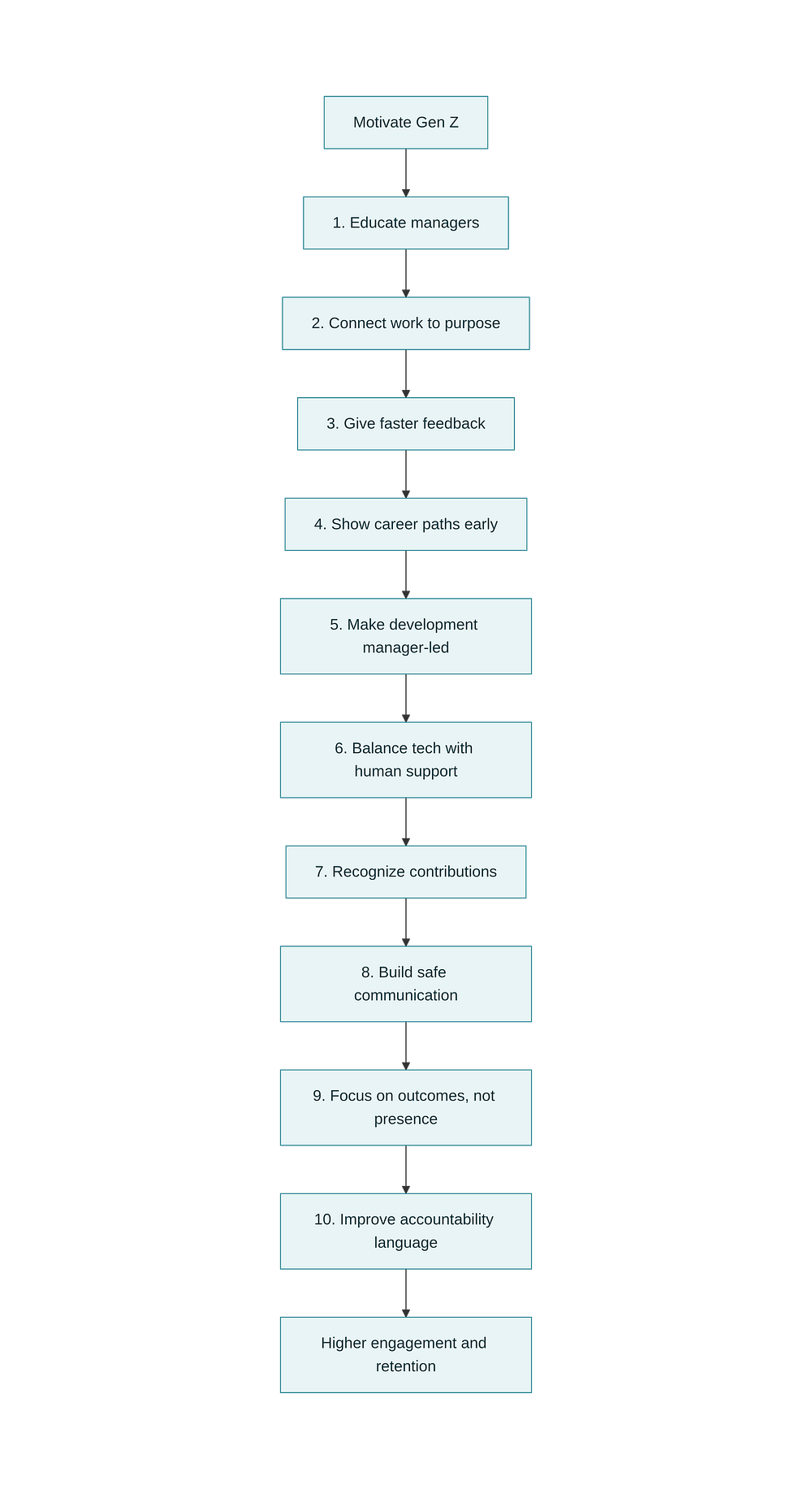
The third step is to redesign feedback around frequency and usefulness. That means shorter, more regular coaching conversations; clearer expectations; and direct examples of what is working, what is not, and what development looks like next. Employers should not wait for the annual review cycle to discuss trajectory, because that delay creates exactly the ambiguity that Gen Z experiences as disengaging.[14][10][1]
The fourth step is to make career growth visible early. Predictive Index found that 56% of Gen Z employees want clearer career-growth paths, and Deloitte says Gen Z wants guidance and mentorship from managers. Organizations do not need to promise rapid promotion, but they do need to show what skills matter, what the next role looks like, what high performance means, and how the employee can build toward it.[1][3]
The fifth step is to treat development as a managerial responsibility, not a self-service platform. Gen Z may be digitally fluent, but that does not mean it wants to navigate growth entirely alone. Mentorship, job shadowing, cross-functional projects, and hands-on learning opportunities are especially effective because they connect feedback to real-world application and reduce the distance between work and growth.[13][8][3]
The sixth step is to build a healthier relationship between technology and human support. Gen Z expects good tools, but it also worries about AI and relevance, so employers should communicate how technology is changing work, what skills will matter more, and where the organization is investing in upskilling. If leaders introduce AI only as an efficiency mandate, they may intensify exactly the anxiety SHRM identifies among younger workers.[3][2]
The seventh step is to improve recognition. FranklinCovey emphasizes that Gen Z values authentic and specific recognition tied to meaningful contributions, and Macorva cites data suggesting frequent recognition reduces the likelihood that employees leave. Recognition works best when it is timely, concrete, and connected to organizational values rather than generic compliments or performative celebration.[15][10]
The eighth step is to create psychologically safe communication norms. If Gen Z employees are being misunderstood, one cause may be that managers are over-relying on assumption rather than dialogue. Managers should ask more often how an employee prefers feedback, what kind of support helps them do their best work, what barriers are slowing them down, and what growth they are trying to achieve in the next year.[14][1]
The ninth step is to stop equating physical presence with commitment. Employers do not have to offer fully remote work for every role, but they should be careful not to interpret requests for flexibility as evidence of weak dedication. Younger workers often evaluate flexibility, personalization, and workflow optimization the same way they evaluate any other productivity variable: if a rule does not clearly improve outcomes, they will question why it exists.[8][5][2]
The tenth step is to give managers better language for accountability. Understanding Gen Z does not mean lowering standards or avoiding hard conversations. It means setting clear expectations, explaining the “why,” checking for understanding, coaching early, documenting progress, and distinguishing between genuine performance issues and generational style differences that are being misread.[7][14][1]
The bigger opportunity for employers
The opportunity here is larger than “how to manage young people.” Gen Z is surfacing weaknesses in workplace design that many older employees also feel but may express less directly: opaque career paths, weak feedback cultures, outdated technology, unclear purpose, inconsistent management, and burnout normalized as commitment. Employers that fix those issues for Gen Z often end up improving the experience for everyone.[1][2][3]
That is why the smartest response is not to ask how to make Gen Z adapt to yesterday’s workplace, but how to update work without losing rigor, accountability, or performance. Gen Z is not rejecting hard work; it is more often rejecting low-clarity work, low-development work, and work that asks for sacrifice without meaning or trust in return.[6][2][3]
Purpose, transparency, coaching, and well-being are not soft concessions. They are management tools that align with what current data says younger workers actually value: money, meaning, growth, and the ability to build a sustainable life. Employers that keep treating those preferences as signs of fragility will keep losing talent they could have developed.[4][11][2][3][1]
The better path is to see Gen Z clearly. This generation wants to learn, wants to contribute, wants to understand the point of the work, and wants managers who communicate like the modern world actually works. Organizations that evolve in that direction will not just get better at managing Gen Z; they will build workplaces that are clearer, faster, more human, and more resilient for the future of work itself.[11][2][3]
HRdeck is a platform designed for HR teams and companies, especially small businesses and nonprofits, to manage policies, compliance, and communication effectively.
Our solution helps organizations stay aligned with workplace policies and regulations, reducing the risk of penalties, liabilities, and reputational harm.
Take advantage of the tools and resources available to help your business minimize legal risks and protect against employee claims.
Try hrdeck.com now!
References
1. https://www.predictiveindex.com/blog/the-perception-gap/
2. https://forum.emclient.com/t/exporting-signatures/52860
3. https://docs.hypermatic.com/emailify/signatures/em-client-windows
4. https://www.theforage.com/blog/basics/gen-z-work-ethic
6. https://www.gwi.com/blog/generation-z-characteristics
8. https://cloudbooking.com/blogs/clearing-10-incorrect-assumptions-about-gen-z-in-the-workplace/
9. https://hrbrainpickings.com/p/what-employers-still-keep-missing-about-gen-z
10. https://www.macorva.com/blog/why-gen-z-demands-real-time-feedback-and-how-to-deliver-it
12. https://torchlighthire.com/debunking-gen-z-stereotypes/
14. https://www.nicheacademy.com/blog/8-tips-for-engaging-gen-z-with-better-training
15. https://www.franklincovey.com/blog/managing-gen-z-at-work/
17. https://www.reddit.com/r/AskReddit/comments/1aywx61/whats_a_gen_z_stereotype_that_you_think_is/
18. https://www.youtube.com/watch?v=K36XPSyOL6o
21. https://www.purpose.jobs/blog/purpose-at-work-building-job-satisfaction
22. https://www.deloitte.com/global/en/issues/work/genz-millennial-survey.html
23. https://www.deloitte.com/us/en/insights/topics/talent/2025-gen-z-millennial-survey.html
24. https://www.deloitte.com/global/en/about/press-room/deloitte-2025-gen-z-and-millennial-survey.html
26. https://www.shrm.org/topics-tools/news/talent-acquisition/how-gen-z-is-shaping-future-of-work
27. https://fortune.com/2025/09/25/suzy-welch-gen-z-unhireable-values-millennial-bosses/
29. https://www.gallup.com/workplace/236450/managers-millennials-feedback-won-ask.aspx
30. https://sydna-startups.gr/wp-content/uploads/2025/07/2025-genz-millennial-survey.pdf
31. https://www.gallup.com/workplace/349484/state-of-the-global-workplace.aspx