
On July 23, 2024, California implemented the California Code of Regulations, Title 8, section 3396, known as “Indoor Heat Illness Prevention Regulation” This regulation mandates that employers adhere to specific safety measures in indoor environments where temperatures reach 82 degrees Fahrenheit or higher.
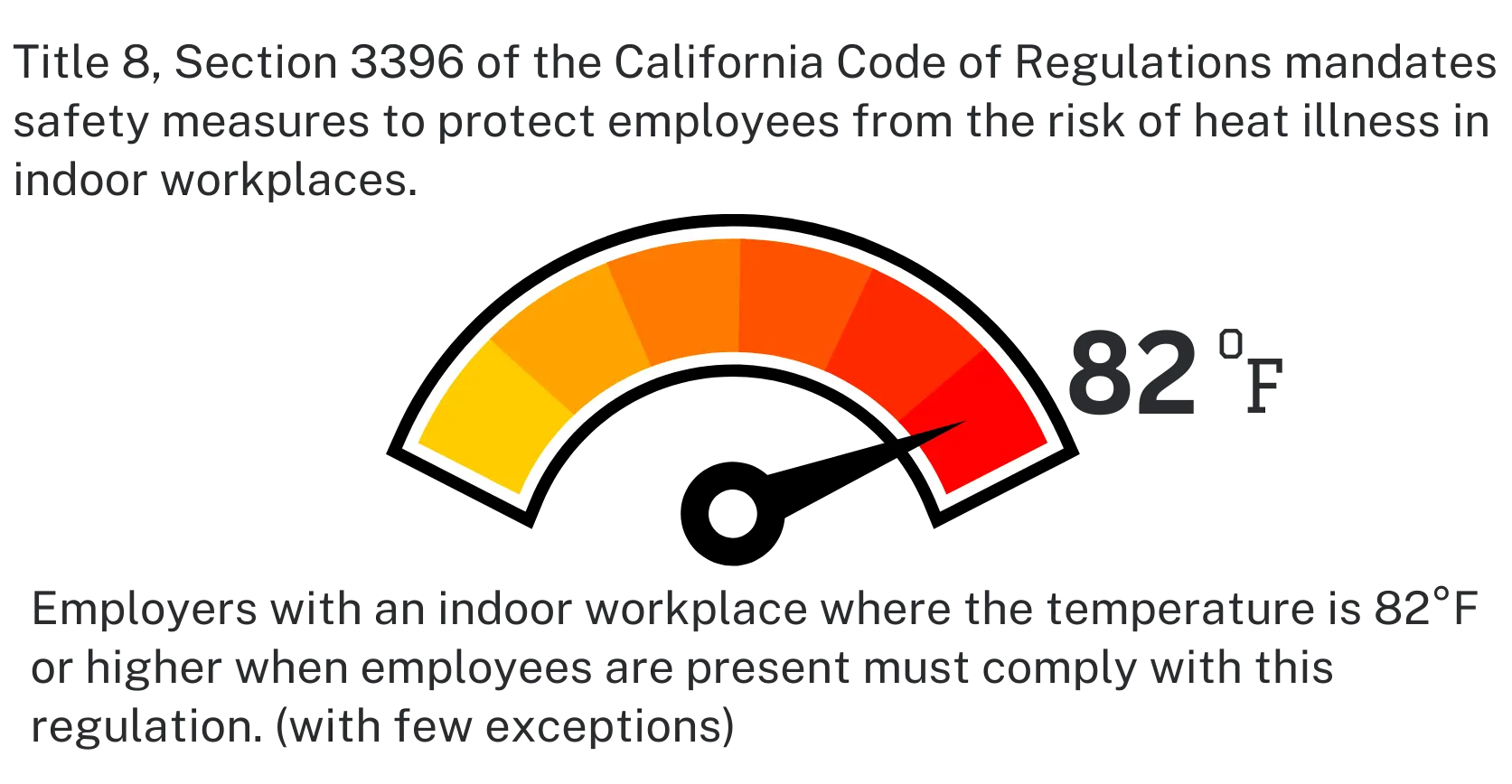
Here are Key elements of the regulation:
1. Workplace Requirements When Temperatures Rise to 82 Degrees
a) Establish a Comprehensive Heat Illness Prevention Plan
Employers need to draft and put into action a bespoke Indoor Heat Illness Prevention Plan, detailing procedures for water access, acclimatization, cool-down zones, temperature and heat index measurement, and emergency responses. This plan should be specifically designed for the working conditions of each employer’s environment. Recent FAQs published by Cal/OSHA underline the necessity for this plan to be more than a generic restatement of safety orders; it must be tailored to the specific operations of the employer.
b) Offer Clean, Cool Water to Employees
It is essential for employers to supply employees with clean, cool drinking water at no cost. This water should be easily accessible, ideally located near the workstations and in indoor cool-down zones. If running water isn’t available, each employee should receive one quart of water per hour. Employers should strongly encourage frequent water consumption during high-heat conditions.
c) Provide Cool-Down Periods
Employers must ensure that employees have access to cool zones for recovery, meal times, and breaks. These areas should maintain a temperature below 82 degrees, shielded from direct sunlight and any significant heat sources, as much as feasible.
Employees must be permitted and encouraged to take preventative cool-down breaks in these zones whenever they feel the need to protect themselves from heat. During such breaks, employers should monitor employees’ well-being, encourage them to stay in the cool-down area, and refrain from assigning work until signs of heat-related distress have subsided.
Importantly, the rule clarifies that a preventative cool-down rest is akin to the ‘recovery period’ defined in Labor Code subsection 226.7(a), entitling employees to a daily premium pay if they are not given these necessary recovery periods. This amendment aims to facilitate civil wage and hour litigation when such recovery periods are not provided, necessitating compensation with premium pay.
d) Acclimatization Monitoring
Employers are advised to keenly observe employees who are newly exposed to high-temperature conditions for signs of heat stress during their first two weeks of work. Likewise, any personnel working during a heatwave where engineering controls are not effective should be monitored.
e) Training Initiatives
Effective training on heat illness risks for both non-supervisory and supervisory staff is required. This instruction should encompass environmental and personal risk factors of heat illness, along with the organization’s procedures for following the indoor heat regulation. Supervisors need to receive further training on managing symptoms of heat illness and how to respond to hot weather advisories.
2. Additional Measures When Temperatures Reach 87 Degrees (or 82 Degrees Under Certain Conditions)
Supplementary steps must be taken when temperatures reach 87 degrees, or 82 degrees in situations where employees wear heat-restrictive clothing or work in areas with high radiant heat.
a) Monitoring and Documentation
It is necessary to measure and document the temperature and heat index whenever it is suspected to reach 87 degrees, or 82 degrees under specific conditions, at the locale where employees are most affected. Measurements should be repeated when expected to rise by at least 10 more degrees. It is crucial to involve employees and any union representatives in this process and maintain records for 12 months or until the next measurements, whichever is later.
Employers can choose to forgo actual measurements by assuming certain work areas require control measures and adhering to these immediately.
b) Risk Mitigation Strategies
Employers must implement a hierarchy of control strategies to lower the risk of heat illnesses. This will likely impose additional costs, especially where cooling systems and building improvements are involved. However, these measures are unnecessary for vehicles with functional air conditioning.
Initially, employers should focus on engineering solutions to bring temperatures and heat index levels below the specified thresholds, considering options like isolating hot processes, installing AC systems, and enhancing natural or local exhaust ventilation.
If engineering measures are insufficient, administrative strategies should be employed to further lower risk, including acclimatizing workers, rotating tasks, adjusting schedules, and potentially altering work attire.
Ultimately, if engineering and administrative controls fall short, personal protective equipment, such as water-cooled garments, should be used as a last resort.
3. Notable Exceptions
Certain circumstances exempt workplaces from this regulation:
– Brief Indoor Exposures: Workspaces where temperatures don’t exceed 95 degrees for more than 15 minutes every hour are exempt, excluding vehicles without air conditioning and shipping containers.
– Telework and Emergency Operations: The rule does not apply to teleworking locations chosen by employees or to emergency operations focused on safeguarding life or property.
4. Penalties
Failing to adhere to indoor heat guidelines can lead to significant repercussions for employers, including:
Citations and fines from Cal/OSHA for any infractions.
Civil lawsuits from employees for heat illness-related damages.
Compulsory extra pay to employees for any days they are denied cool-down breaks.
Obligatory compensation to nonexempt employees if businesses shut down due to intense heat.
Summary
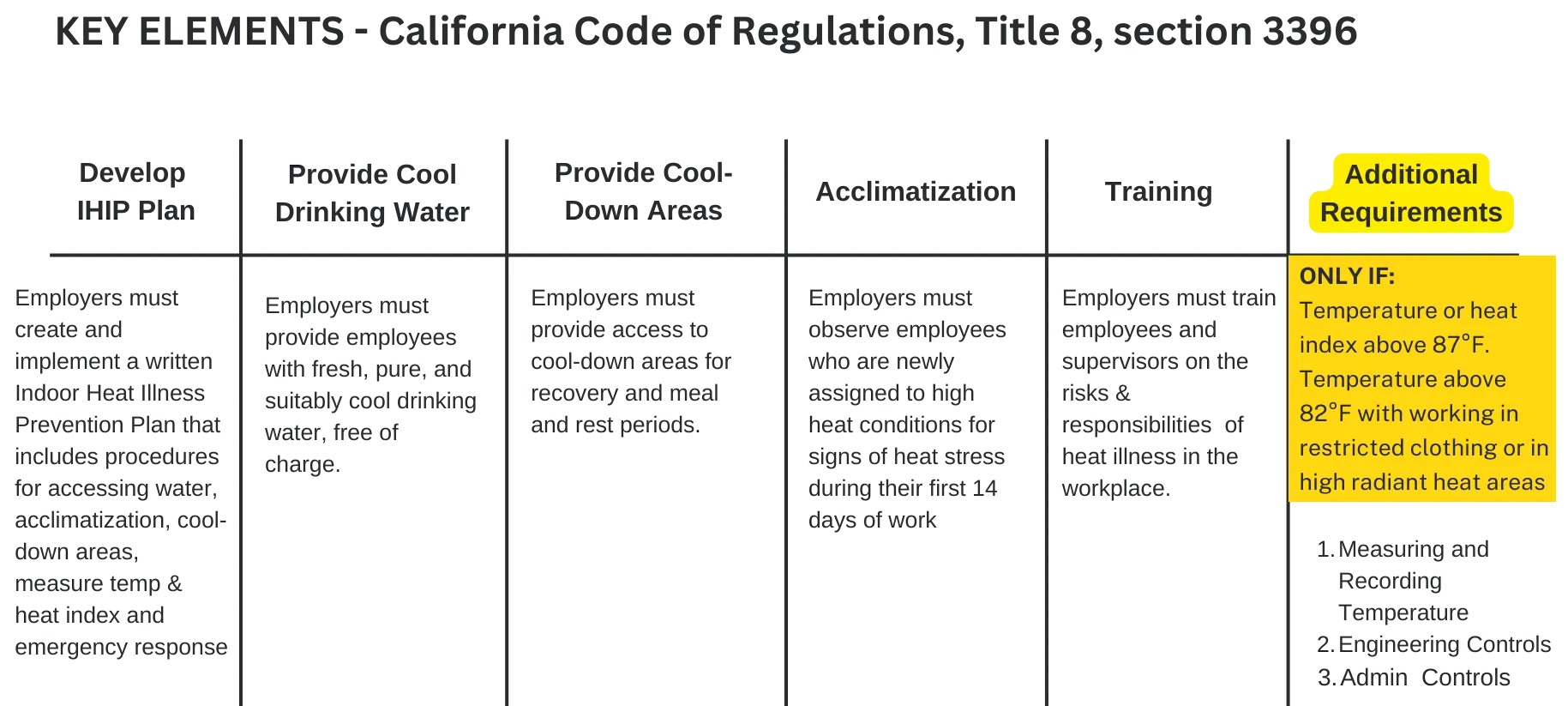
Recently enacted Califormia indoor heat regulations establish a comprehensive framework for employers when temperatures reach 82 degrees, requiring tailored Heat Illness Prevention Plans, provision of cool drinking water, and access to cool-down areas for employees. If temperatures climb to 87 degrees or in circumstances with heat-restrictive clothing, more stringent measures such as monitoring, documentation, and control strategies are mandated. Employers must utilize engineering and administrative strategies to mitigate heat risks, with personal protective gear as a last resort. Exceptions exist for brief exposures and specific operations, while non-compliance can lead to substantial penalties, including fines and lawsuits.
Ensure your business efficiently meets California’s Indoor Heat Illness Prevention Regulation requirements with hrdeck.com. Our platform includes all necessary plans and training. Take advantage of our tools and resources to minimize legal risks and safeguard against employee claims.
Hrdeck is a platform designed for HR teams and companies to manage policies, compliance and communication effectively. Our solution aids in complying with policies and regulations, thereby safeguarding from any penalties, liabilities and reputation.
Try hrdeck.com now!
References:
[1] https://www.dir.ca.gov/dosh/heatillnessinfo.html
[2] https://www.osha.gov/heat-exposure/standards