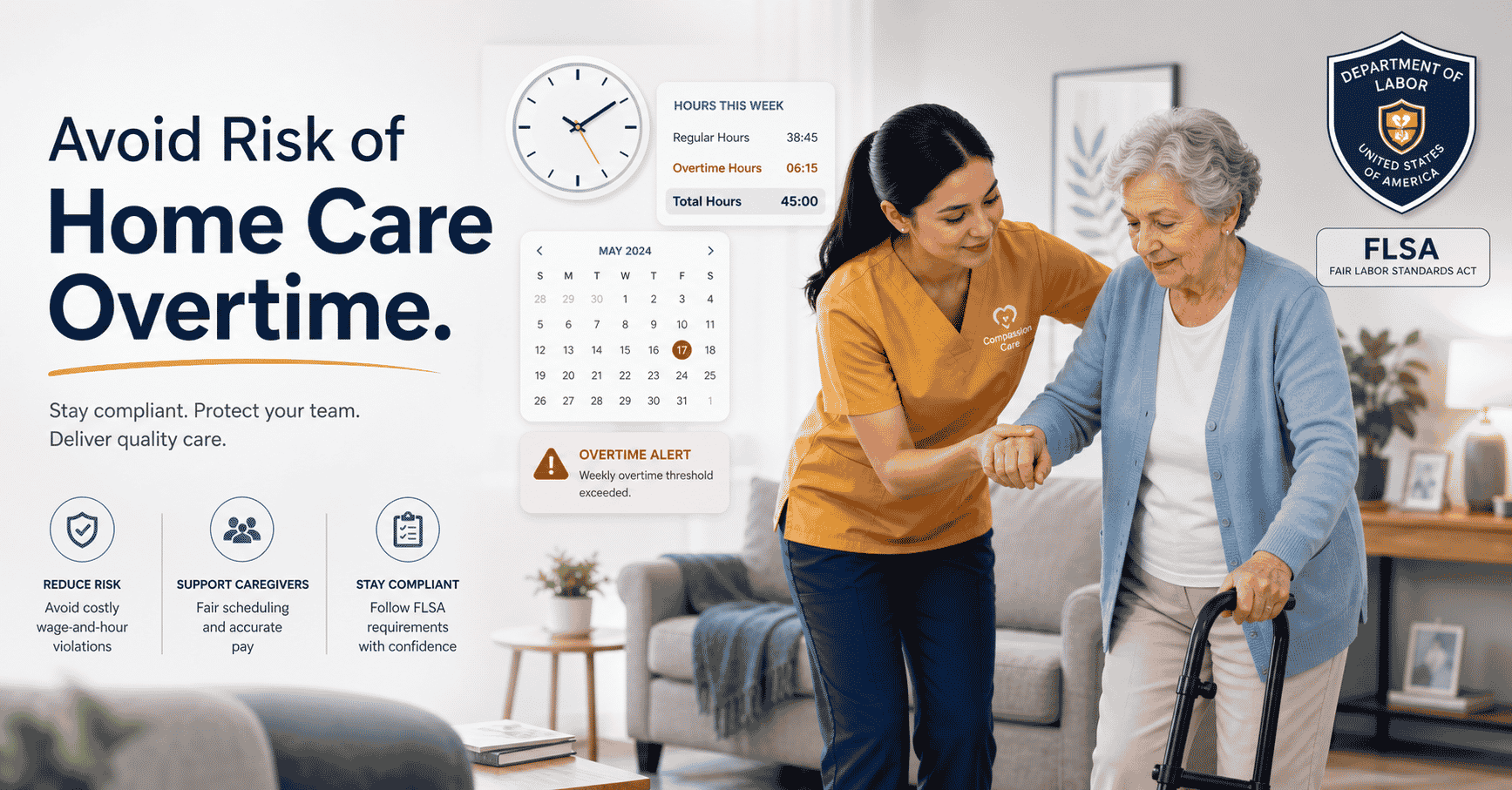
As the demand for home care services grows, providers are increasingly exposed to the risk of wage and hour violations, particularly related to overtime. The U.S. Department of Labor (DOL) has tightened enforcement of the Fair Labor Standards Act (FLSA) on home care workers, and the 2013 “Home Care Final Rule” has reshaped the landscape for third-party employers, such as home care agencies. In a recent case, an Ohio-based home care company was found liable for FLSA violations, including willful overtime violations, after the DOL challenged the company’s overtime practices. The 6th Circuit Court of Appeals upheld the DOL’s 2013 regulation, affirming that third-party providers must pay overtime, even for live-in employees or family members providing care.
The 2013 rule precluded third-party employers (like home care agencies) from using the companionship services and live-in exemptions, meaning most home care workers must now be paid at least the federal minimum wage and overtime pay. The DOL’s guidance emphasizes that home care workers must be paid for all hours worked, with overtime at one and a half times their regular rate for hours exceeding 40 in a workweek. The 6th Circuit case reinforced that employers cannot avoid overtime liability by reclassifying workers or manipulating hourly rates based on hours worked in a week. The court found that the DOL’s 2013 regulation was valid and enforceable, and that the 1974 amendments to the FLSA expressly delegated authority to the DOL to define and regulate these exemptions.
For home care agencies, avoiding risk means understanding the companionship services and live-in exemptions, ensuring accurate timekeeping, and maintaining proper records. The FLSA’s companionship services exemption is narrow, applying only when workers spend no more than 20% of their time on personal care tasks and do not perform medically related duties. The live-in exemption applies only to employees who reside in the household and are not paid by a third-party employer. The DOL’s enforcement actions highlight that agencies cannot bypass these rules, and courts have consistently upheld the 2013 regulation despite challenges to the DOL’s authority.
In 2025, the DOL suspended enforcement of the 2013 rule temporarily, but proposed a rule to restore the pre-2013 framework, which could allow third-party employers to reclaim the exemptions. However, until final rules are issued, agencies must remain compliant with current requirements to avoid costly back-pay claims and penalties. The 6th Circuit case serves as a warning that employers cannot ignore or reinterpret the 2013 regulation; they must pay overtime where required.
HR and agency leaders should prioritize clear policies, regular audits, and training to mitigate risk. By staying informed on evolving regulations and ensuring workers are paid correctly, home care providers can avoid the legal and financial pitfalls of overtime violations.[1][2][3]
Legal Compliance: The 2013 FLSA Rule and Its Impact
The 2013 FLSA rule fundamentally changed how home care workers are compensated. The DOL’s Home Care Final Rule expanded wage protections, requiring most home care workers to receive at least the federal minimum wage and overtime pay. The rule precluded third-party employers from using the companionship services and live-in exemptions, meaning agencies must now pay overtime for hours worked over 40 in a week. The 6th Circuit’s decision in the Ohio case reaffirmed that this rule is valid and enforceable, and that employers cannot avoid overtime liability by reclassifying workers or manipulating pay structures. The court found that the 1974 amendments to the FLSA expressly delegated authority to the DOL to define and regulate these exemptions, and that the 2013 regulation was a reasonable interpretation of the statute. As a result, agencies must comply with current requirements, even as the DOL proposes to restore the pre-2013 framework.[2][3]
Identifying Exemptions and Non-Exempt Employees
Home care agencies must understand the narrow scope of the companionship services exemption and the live-in exemption. The companionship services exemption applies only when workers spend no more than 20% of their time on personal care tasks and do not perform medically related duties. The live-in exemption applies only to employees who reside in the household and are not paid by a third-party employer. The 2013 rule eliminated the ability of third-party employers to claim these exemptions, meaning most agency-hired home care workers are non-exempt and entitled to overtime pay. The 6th Circuit case emphasized that employers cannot bypass these rules, and that courts will uphold the DOL’s interpretation.[1][2]
Timekeeping, Recordkeeping, and Overtime Calculations
Accurate timekeeping and recordkeeping are essential for compliance. The FLSA requires employers to keep records of hours worked each day and total hours each week, wages paid, and any deductions or credits. The DOL’s guidance recommends that employers maintain a consistent workweek and track all hours worked, including travel time and on-call time. The 2013 rule also clarified that live-in workers must be paid for all hours worked, with sleep time and other breaks excluded only under specific conditions. The 6th Circuit case reinforced the importance of maintaining accurate records, as the DOL’s enforcement action was based on the employer’s failure to track and pay for all hours worked.[2][1]
Mitigating Risk Through Policy and Training
Home care agencies can mitigate risk by implementing clear policies, training managers, and conducting regular audits. The DOL’s guidance recommends that employers review their pay practices, update employee handbooks, and ensure that workers understand their rights. The 6th Circuit case highlights the importance of consistent enforcement and the need to train managers on the 2013 rule. Agencies should also consider using technology to track hours and automate compliance checks. By staying informed on evolving regulations and ensuring workers are paid correctly, home care providers can avoid the legal and financial pitfalls of overtime violations. The DOL’s proposed rule to restore the pre-2013 framework may offer some relief, but until final rules are issued, agencies must remain compliant with current requirements.[3][2]
The Role of Technology and Best Practices
Technology can play a key role in mitigating overtime risk. Home care agencies should consider using scheduling software to prevent over-scheduling, automate overtime alerts, and track hours accurately. The DOL’s guidance recommends that employers review their scheduling practices and consider using tools to monitor hours and prevent violations. The 6th Circuit case underscores the importance of accurate recordkeeping and the need for employers to keep detailed records of hours worked and wages paid. By leveraging technology and best practices, home care providers can ensure compliance and protect their workforce.[4][5]
Looking Ahead: The DOL’s Proposed Rule and Future Compliance
The DOL has proposed a rule to restore the pre-2013 framework, which would allow third-party employers to reclaim the companionship services and live-in exemptions. The proposed rule is subject to public comment and may change the landscape for home care agencies. However, until final rules are issued, agencies must remain compliant with current requirements. The 6th Circuit case serves as a reminder that employers cannot ignore or reinterpret the 2013 regulation; they must pay overtime where required. By staying informed on evolving regulations and ensuring workers are paid correctly, home care providers can avoid the legal and financial pitfalls of overtime violations.[6][2]
Want to manage your policies & employee handbook more effectively?
HRdeck is a platform designed for HR teams and companies, especially small businesses and nonprofits, to manage policies, compliance, and communication more effectively. Our solution helps organizations stay aligned with workplace policies and regulations, reducing the risk of penalties, liabilities, and reputational harm. Take advantage of the tools and resources available to help your business minimize legal risks and protect against employee claims.
Try hrdeck.com now.
References
1. https://www.dol.gov/sites/dolgov/files/WHD/legacy/files/homecare_guide.pdf
2. https://www.dol.gov/agencies/whd/direct-care
3. https://www.law360.com/articles/2460877/6th-circ-says-dol-could-back-ot-for-home-care-in-2013-reg
4. https://caretap.net/blog/managing-caregiver-overtime-strategies-home-care-agencies/
5. https://www.caresmartz360.com/blog/news-events/home-care-wage-final-rule-2025/
8. https://hrdeck.com/2025-state-labor-law-updates-for-u-s-small-businesses/
9. https://hrdeck.com/record-layoffs-record-burnout-what-employers-owe-their-hr-teams/
10. https://hrdeck.com/category/blog/
11. https://hrdeck.com/when-your-employee-handbook-becomes-a-business-liability/
12. https://hrdeck.com/the-speak-up-problem-why-employees-hold-back-honest-feedback/
13. https://hrdeck.com/the-essentials-of-an-employee-handbook/
14. https://hrdeck.com/what-to-include-in-employee-handbook/
16. https://www.aarp.org/advocacy/job-protections-home-care-workers/
18. https://www.homeworksolutions.com/knowledge-center/overtime-rules-for-senior-home-care-providers/
19. https://www.disabilityrightsohio.org/commint_ip_overtime_rule_changes
21. https://www.fairlaborlaw.com/blog/2024/november/understanding-overtime-pay-for-home-health-aides/
22. https://hrdeck.com/an-employers-guide-employee-disengagement-quiet-quitting-and-quiet-cracking/
23. https://www.nelp.org/app/uploads/2015/03/Home-Care-State-by-State.pdf
28. https://www.honigman.com/alert-2422
30. https://www.hcaoa.org/newsletters/reminder-take-action-on-companionship-exemption-today
35. https://hrdeck.com/understanding-pregnant-workers-fairness-act-pwfa/
37. https://www.opn.ca6.uscourts.gov/opinions.pdf/26a0099p-06.pdf
39. https://flsaovertimelaw.com/tag/companionship-exemption/
40. https://law.justia.com/cases/federal/appellate-courts/ca6/22-3102/22-3102-2023-05-19.html
41. https://rosemarksystem.com/blog/overtime-in-home-health-care-revisited/
43. https://www.celeryway.com/posts/nursing-home-overtime-costs
45. https://www.beneschlaw.com/insight/the-companionship-services-exemption-on-the-verge-of-extinction/
46. https://hrdeck.com/navigating-california-sb553-law-employers-tips/
47. https://www.dol.gov/agencies/whd/fact-sheets/79a-flsa-companionship
48. https://www.smartlinx.com/resources/blog/how-to-manage-overtime-in-post-acute-care
50. https://www.onshift.com/resources/blog/4-ways-to-minimize-overtime-in-senior-care
51. https://hrdeck.com/nonprofit-hr-compliance-risks-and-pain-points-in-2026/
52. https://hrdeck.com/california-small-businesses-avoid-compliance-risks-in-2026/
53. https://hrdeck.com/avoid-costly-compliance-mistakes-in-2026-compliance-risks-in-2026/